Plastic pallets vs wooden pallets — which is better for export logistics? Learn the real difference in durability, ISPM 15 compliance, hygiene, and total cost. Discover why more exporters are switching to plastic for safer, faster, and greener shipping.
A practical guide to UL 94 testing for plastic pallet materials, covering specimen preparation, separate conditioning groups, the 50 W vertical burning procedure, V-0/V-1/V-2 criteria and test report review.
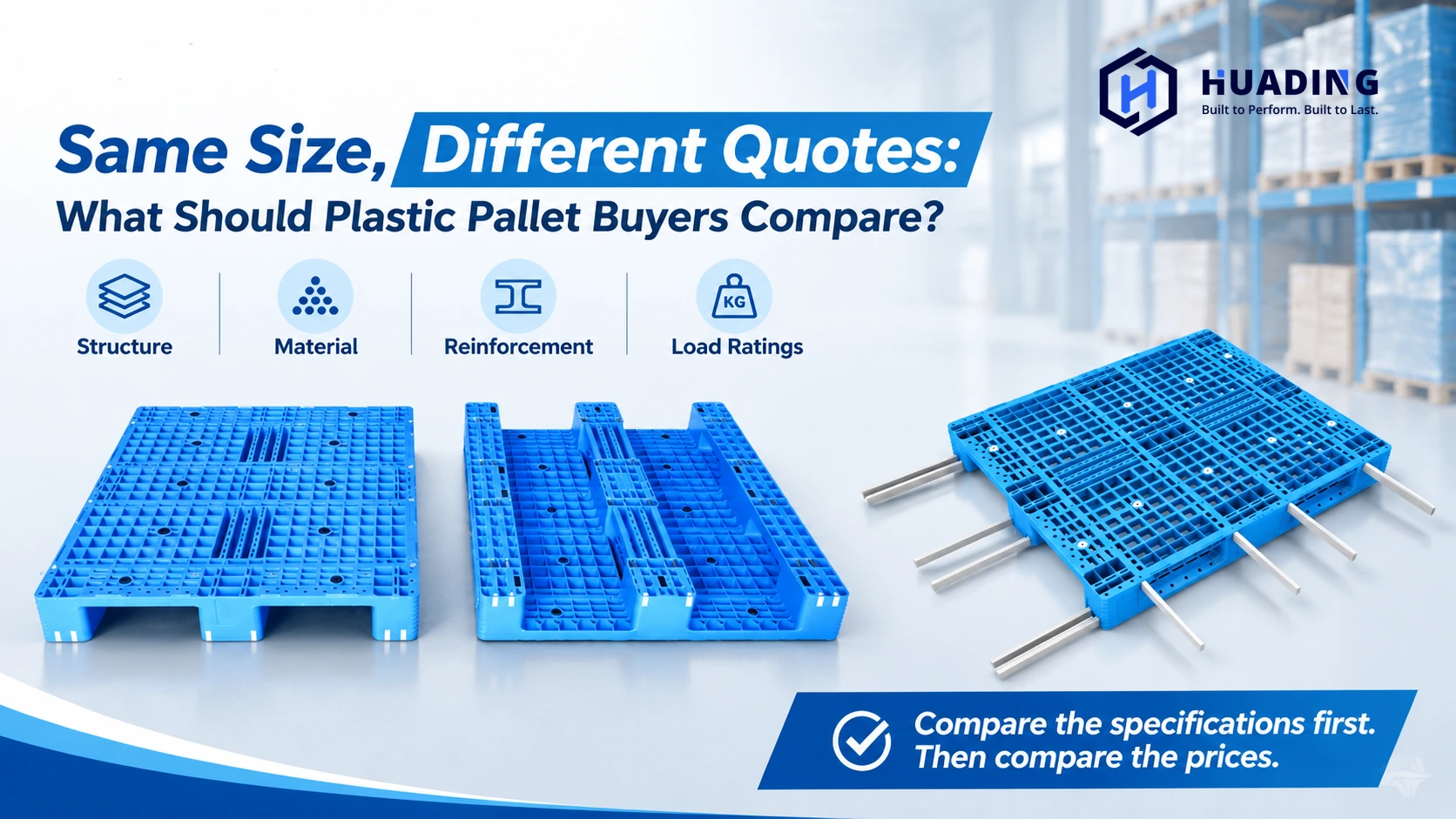
Same-size plastic pallets can have different structures, materials, weights, reinforcement and load ratings. This buyer guide explains what to confirm before comparing prices, including commercial terms and supplier capability.
LAFCO in Guatemala uses HUADING 1210 plastic pallets to store cartons of Recover products and handle warehouse rack loading and unloading. The customer reported six years or more of use for some pallets from an earlier supply. Its latest order selected the standard flat-deck 3-runner model after previous use of the flat-deck 9-leg model, reflecting its current racking requirements. This case separates customer-reported use from a tested service-life guarantee.
When sourcing plastic pallets for a warehouse with racking, the choice between a rackable and stackable pallet has a direct impact on load safety and product damage risk. A rackable plastic pallet is engineered to bridge two rack beams without full surface support beneath it — a structural demand that nine-leg (nine-foot) pallets cannot meet. A stackable pallet is designed for floor storage and vertical stacking only. Beyond structure, buyers should always check the rack load rating — not just the static load — and confirm the beam span the rating was tested against. For loads above 1 tonne on racking, steel-reinforced rackable pallets are typically required. This guide explains the key structural differences, load rating logic, common purchasing mistakes, and a step-by-step decision framework to help buyers select the right plastic pallet before placing an order.
This guide explains the three essential load ratings of plastic pallets—static, dynamic, and racking—and how each affects warehouse safety, forklift handling, and racking system performance. Learn how to select the correct pallet capacity to prevent load failure and ensure a safer, more efficient supply chain.
In the industrial logistics sector, balancing standardization with flexibility has long been a challenge—until the advent of modular plastic pallets. The Large Heavy-Duty Grid Plastic Modular Pallet breaks traditional constraints through innovative design, positioning itself as a revolutionary
Plastic Pallets and Crates - Environmental Standards: Many plastic pallets and crates now use 30%-50% recycled materials. There are strict limits on harmful additives to reduce environmental impact and extend product life. Overall, both Australia and Europe are making significant strides in recycling and reusing plastics to cut down on environmental impacts and promote sustainable growth in the packaging industry.
Introduction to Splicing Plastic PalletsSplicing plastic pallets is an innovative approach that involves the assembly of multiple plastic pallet modules. This method allows for the creation of customizable pallets that can accommodate a wide range of sizes and shapes, making them ideal for various i
Plastic pallets have become a popular choice in the logistics and warehousing industry due to their durability, cost-effectiveness, and environmental benefits. Understanding the sturdiness of plastic pallets is crucial for businesses that rely on safe and efficient material handling solutions. This