

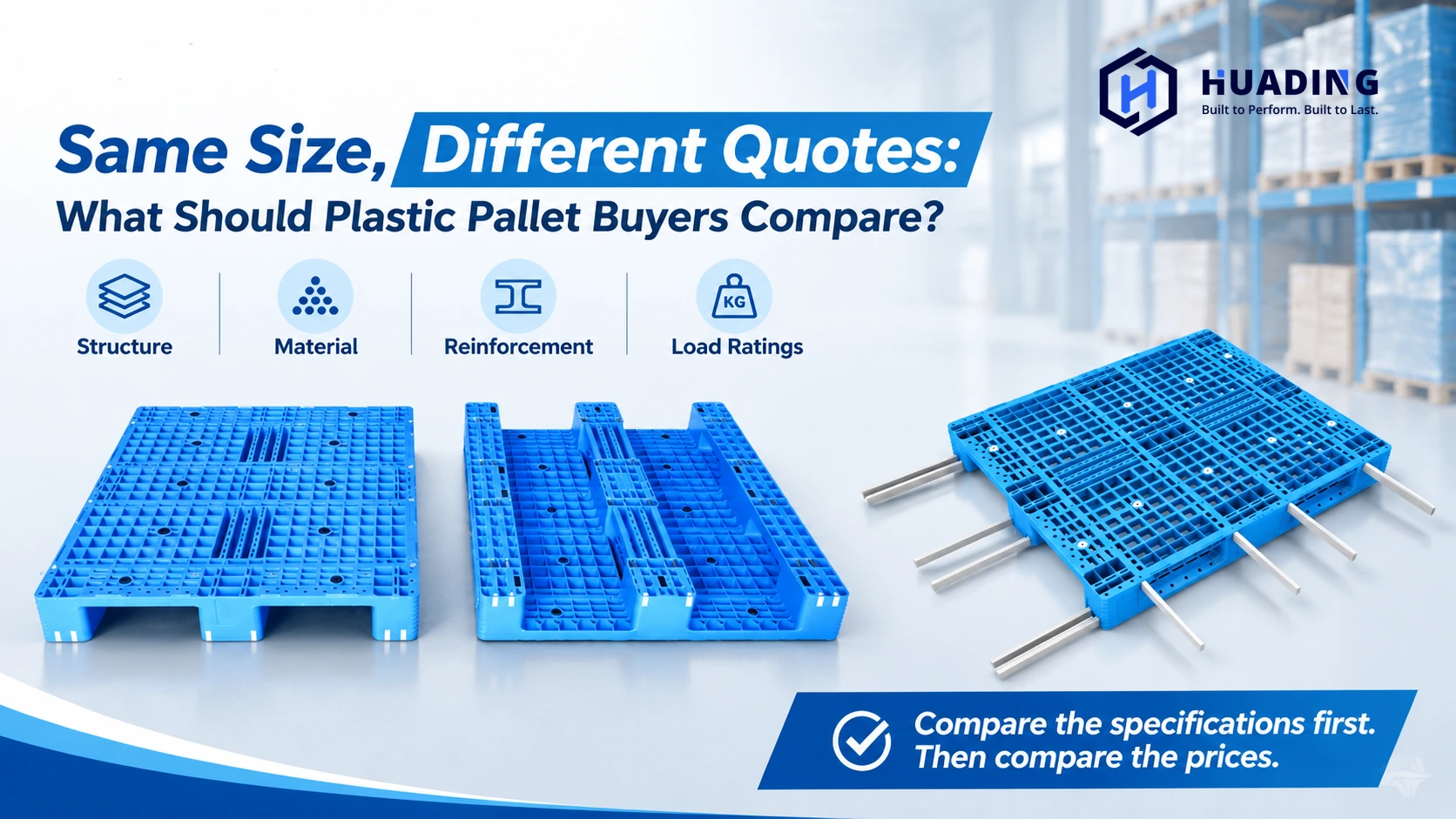
Two suppliers quote you the same plastic pallet. Same length, same width, same height. One price is noticeably lower than the other.
It’s tempting to draw a quick conclusion: the cheaper one must be weaker, lighter, or made from lower-grade material. Or the opposite — the more expensive one must simply be “better.”
Neither conclusion is safe to make from a quote alone. A pallet’s outer dimensions describe a footprint, not a complete product specification. Two pallets can share identical measurements and still differ in base structure, material composition, reinforcement, and weight — all of which can affect manufacturing costs before commercial terms are even considered.
Structure and Reinforcement Rarely Get Compared — But They Matter
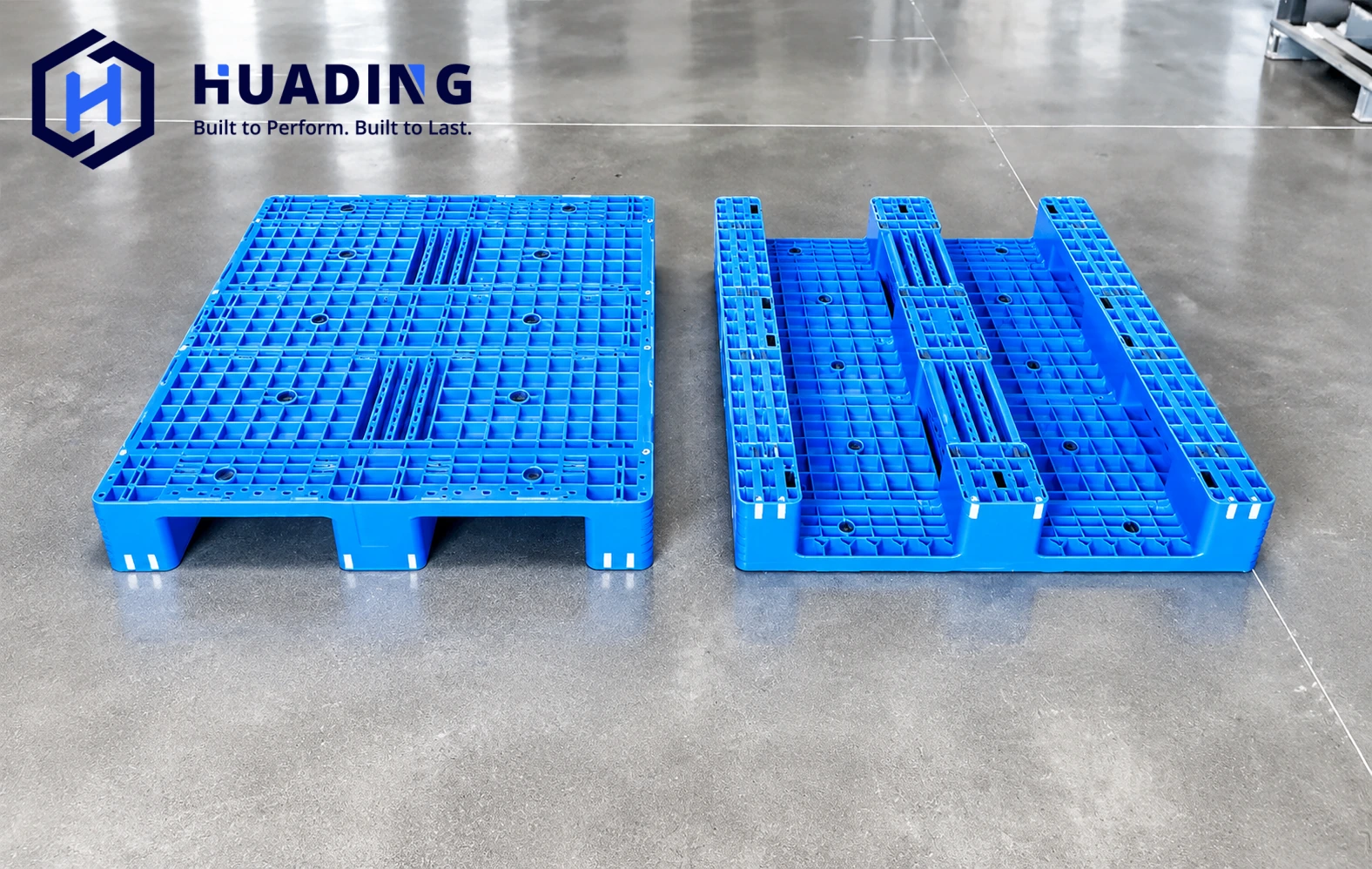
Structural differences can exist even when the external dimensions are identical.
Nine-leg bases, runner-style bases, grid structures, and solid-deck designs distribute loads differently and involve different material layouts.
Nestable pallets introduce another design consideration. Their geometry allows empty pallets to fit into one another, improving storage and return-shipping density. However, the design also influences the support arrangement and structural configuration. Its load performance must be evaluated against the specifications of the actual model rather than assumed from its appearance.
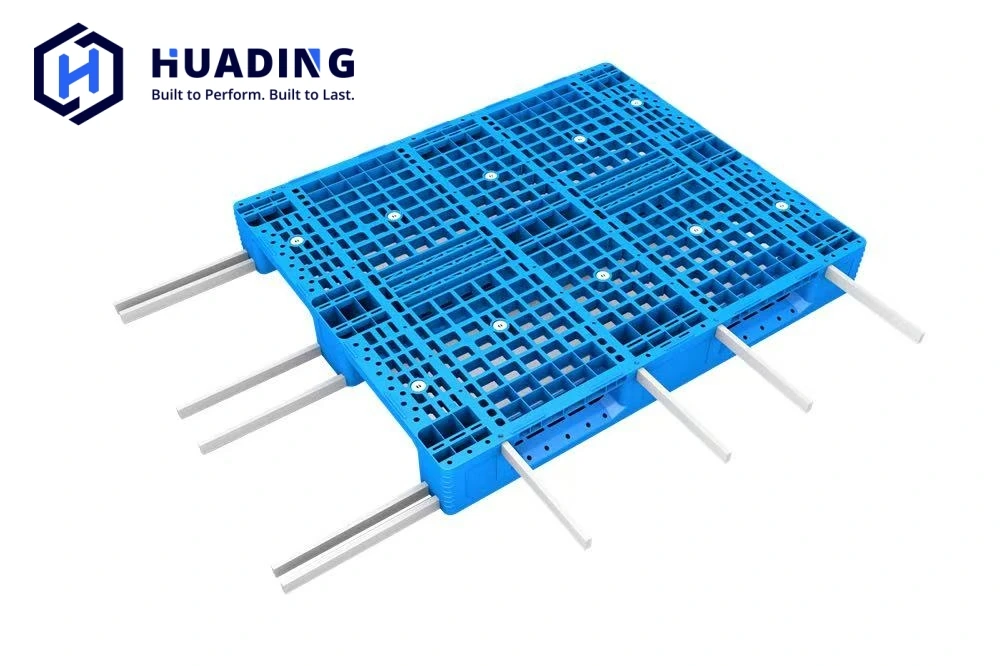
Reinforcement adds another layer that buyers often overlook.
Some pallets rely primarily on their plastic structure, while others incorporate steel tube reinforcement. The number, position, and arrangement of reinforcing tubes can influence how the pallet distributes loads and performs under specific operating conditions.
Deck and base structure
Steel tube reinforcement
None of these details is necessarily visible in a basic size specification.
If your team is comparing three quotations for a 1200 × 1000 mm pallet, you may actually be comparing three structurally different products without realizing it.
Material Names Don't Tell You the Grade — But Weight Is Something You Can Check
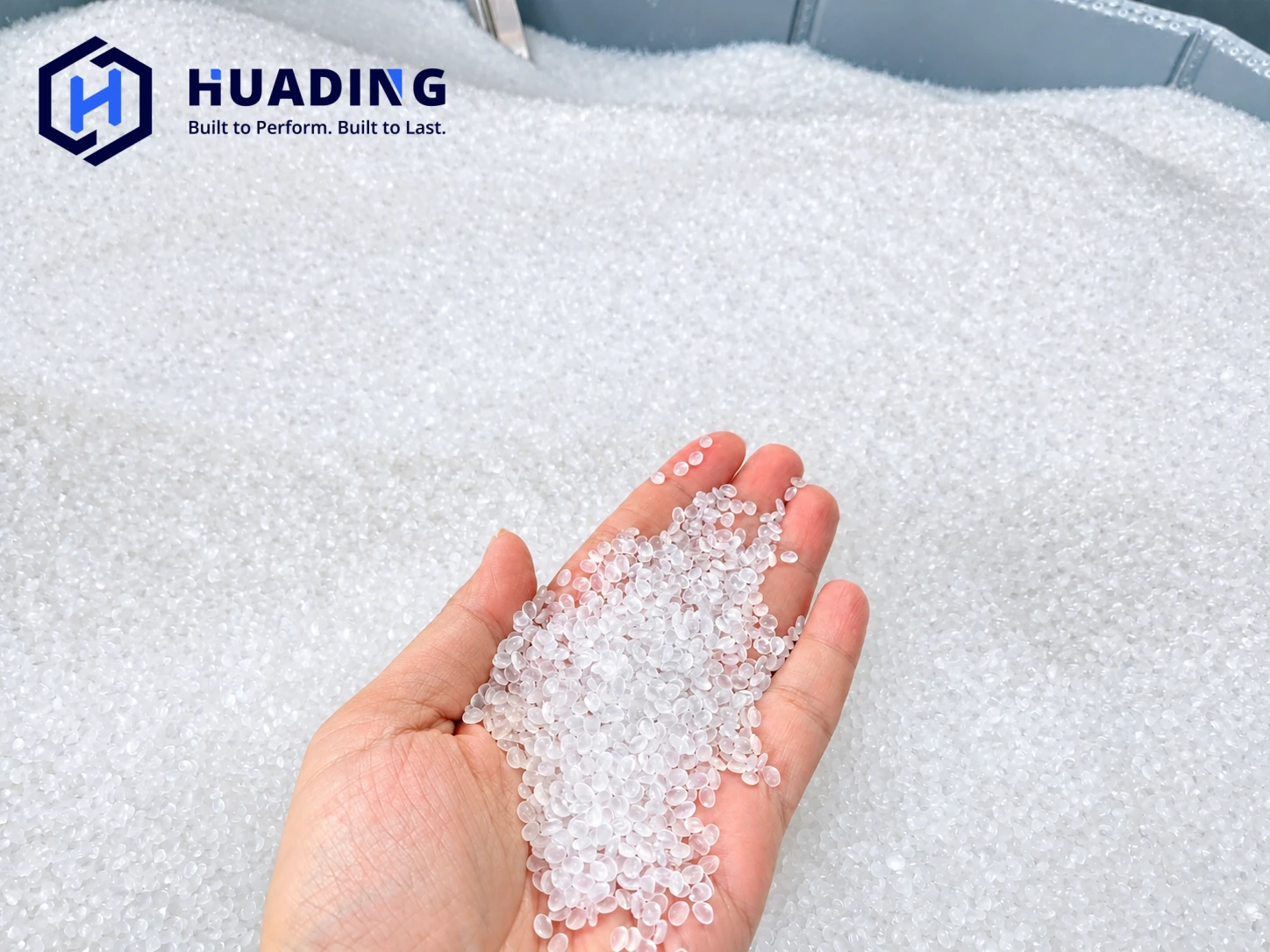
HDPE or PP on a quotation tells you the general resin type, not necessarily the complete material specification.
Virgin, recycled, and blended materials can differ in composition and consistency. Recycled material, in particular, can vary depending on its source, processing, and quality control.
This does not mean recycled material is automatically unsuitable, or that virgin material guarantees better performance in every application.
However, a quotation that simply states “HDPE” or “PP” without clarifying the relevant material specifications leaves important questions unanswered.
Buyers should ask about the resin grade, material composition, and recycled content where relevant, rather than relying on the material name alone.
One practical cross-check is product weight.
A pallet's weight reflects its overall material use and structural design, including wall thickness, rib configuration, and reinforcement. Two quotations for pallets with the same nominal dimensions but noticeably different weights may indicate different underlying configurations, even when the material name on paper is identical.
However, weight is not a standalone measure of quality. A heavier pallet is not automatically stronger or more durable. Its weight needs to be evaluated alongside the structural design, material specifications, and verified load ratings.
Static, Dynamic, and Racking Load Are Three Different Numbers — Not One
Pallet load capacity isn't a single figure. Static load, dynamic load, and racking load describe different operating conditions.
- Static load
- Static Load applies when a pallet is stationary on a suitable, flat, continuous surface.
- Dynamic load
- Dynamic Load applies when a pallet is being lifted or moved by handling equipment, such as a forklift or pallet jack.
- Racking load
- Racking Load applies when a pallet is supported by warehouse rack beams in a specified configuration, with part of its structure spanning between the supports.
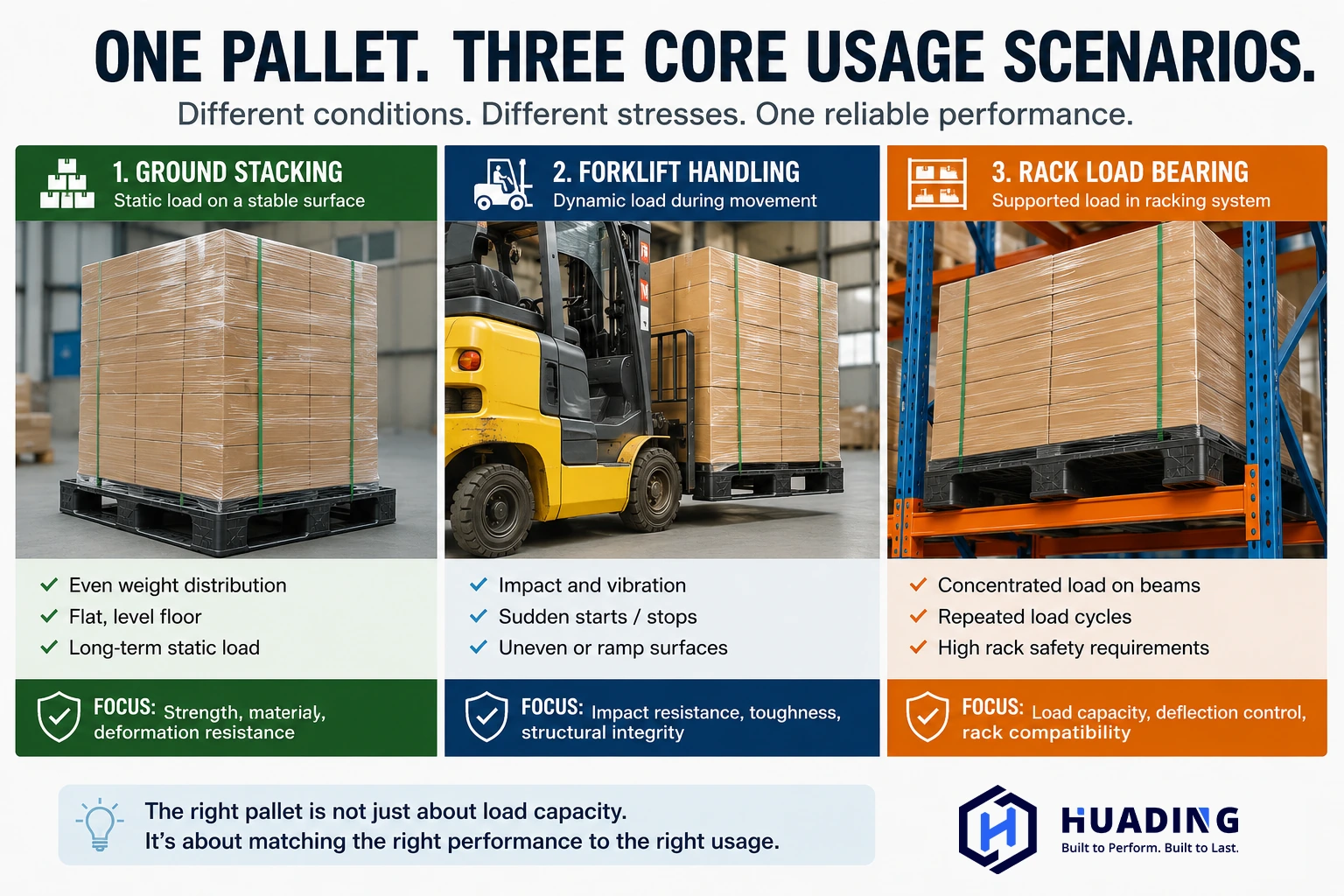
These ratings are not interchangeable. Their actual values depend on factors such as pallet structure, load distribution, support conditions, handling methods, and testing procedures.
Racking applications require particular attention because the pallet must support its load across a defined beam arrangement. Beam span, support width, load distribution, and the duration of loading can all affect performance. Sustained loading may also introduce long-term deformation, commonly referred to as creep.
A quotation that references only one load figure — often the static load — does not establish that the pallet is suitable for warehouse racking.
If your operation stores loaded pallets on rack beams rather than on the floor, this is one of the most important details to confirm:
Which load rating applies to your actual racking arrangement, and under what test conditions was it established?
Beyond Product Specifications: Compare Commercial Terms and Evaluate the Supplier
Not every price difference comes from the pallet's design or material.
Order quantity and MOQ, packaging methods, container-loading efficiency, trade terms such as FOB or CIF, destination-specific logistics costs, and whether inspection or technical documentation is included in the quotation can all affect the final purchasing cost.
These are legitimate commercial factors that should be evaluated separately from the product's technical specifications. Understanding these differences helps buyers avoid confusing commercial price variations with differences in product quality.
However, comparing quotations is only part of the purchasing decision. The supplier's manufacturing experience, product range, and ability to provide a dependable supply also deserve attention.
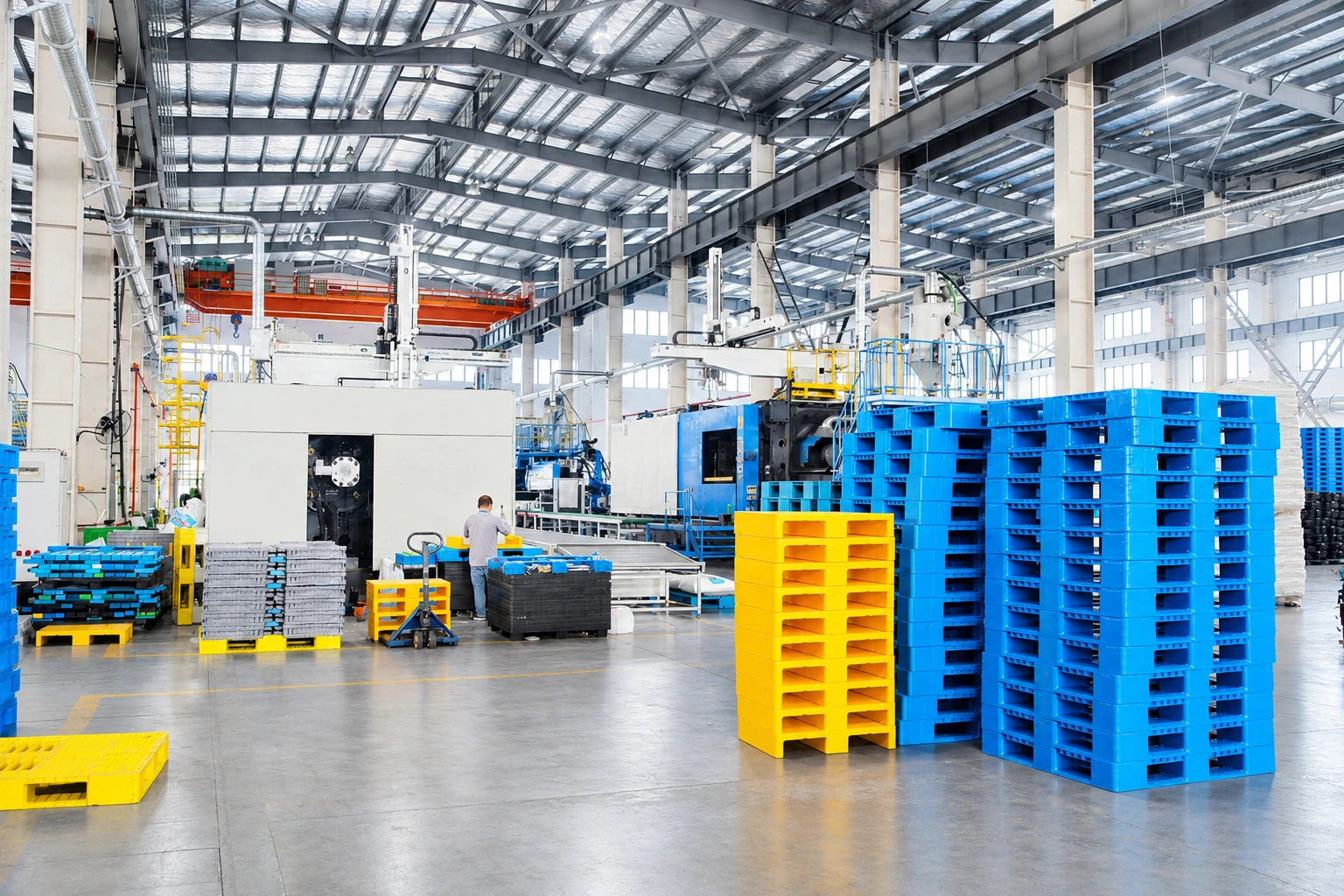
With 20 years of experience in industrial packaging, HUADING focuses on standardized plastic pallets and reusable logistics packaging products. Its product range covers multiple standard sizes and structural configurations for warehouse storage, material handling, transportation, and export applications. HUADING's experience in industrial applications also includes cooperation with established companies such as Volvo, Hisense, and Great Wall.
For buyers, working with an experienced supplier means more than simply receiving a product quotation. It also means having access to suitable standard product options, a clearer understanding of structural differences, and support in matching product specifications to actual operating requirements.
HUADING focuses on consistent product quality, dependable supply capability, and competitive pricing. By reviewing dimensions, structural requirements, load conditions, and order quantities, our team can help buyers identify suitable standard plastic pallet options and reduce the risk of selecting products that do not match their intended applications.
The Point Isn't That Cheaper Is Riskier
A lower quotation does not automatically mean lower quality. Equally, a higher one does not automatically guarantee better performance.
What it means is that your team needs to verify exactly what is included in each offer.
Without that verification, a price gap could come from a different structural design, material composition, product weight, reinforcement configuration, order volume, or simply different trade terms.
There is no reliable way to identify the reason without reviewing the underlying specifications.
Before lining up final numbers, it's worth checking:
- Are the external dimensions actually identical, or just close?
- Are the deck and bottom structures the same?
- Are the material specifications comparable, rather than just sharing the same resin name?
- Have actual product weights been confirmed?
- Is the reinforcement configuration clearly specified in both quotations?
- Are static, dynamic, and racking load ratings distinguished?
- Do the load ratings match your actual storage and handling conditions?
- Are order quantities, packaging, and delivery terms genuinely comparable?
- Have the specifications been confirmed against a physical sample or supporting technical documentation?
If several of these points are still unclear, it's worth resolving them before comparing the final price.
Planning your next plastic pallet purchase?
Whether you need pallets for warehouse storage, forklift handling, export shipments, or repeated logistics operations, HUADING can help you review the requirements and identify suitable standard product options.
Discuss your pallet requirementsSend us your required pallet dimensions, cargo weight, storage or handling conditions, order quantity, and delivery destination. Our team can help you evaluate the relevant specifications and prepare a quotation based on your application.
Compare the specifications first. Then compare the prices.