Views: 68 Author: Site Editor Publish Time: 2025-11-28 Origin: Site

In the industrial logistics and warehousing sector, selecting the right packaging is not just about dimensions or price—it is fundamentally about safety and operational efficiency. A misunderstood pallet specification is one of the leading causes of warehouse accidents, damaged inventory, and supply chain disruptions.
For logistics managers and industrial buyers, understanding the three critical load ratings—Static Load, Dynamic Load, and Racking Load—is essential. This guide provides a clear technical breakdown to help you make accurate, data-driven pallet procurement decisions.
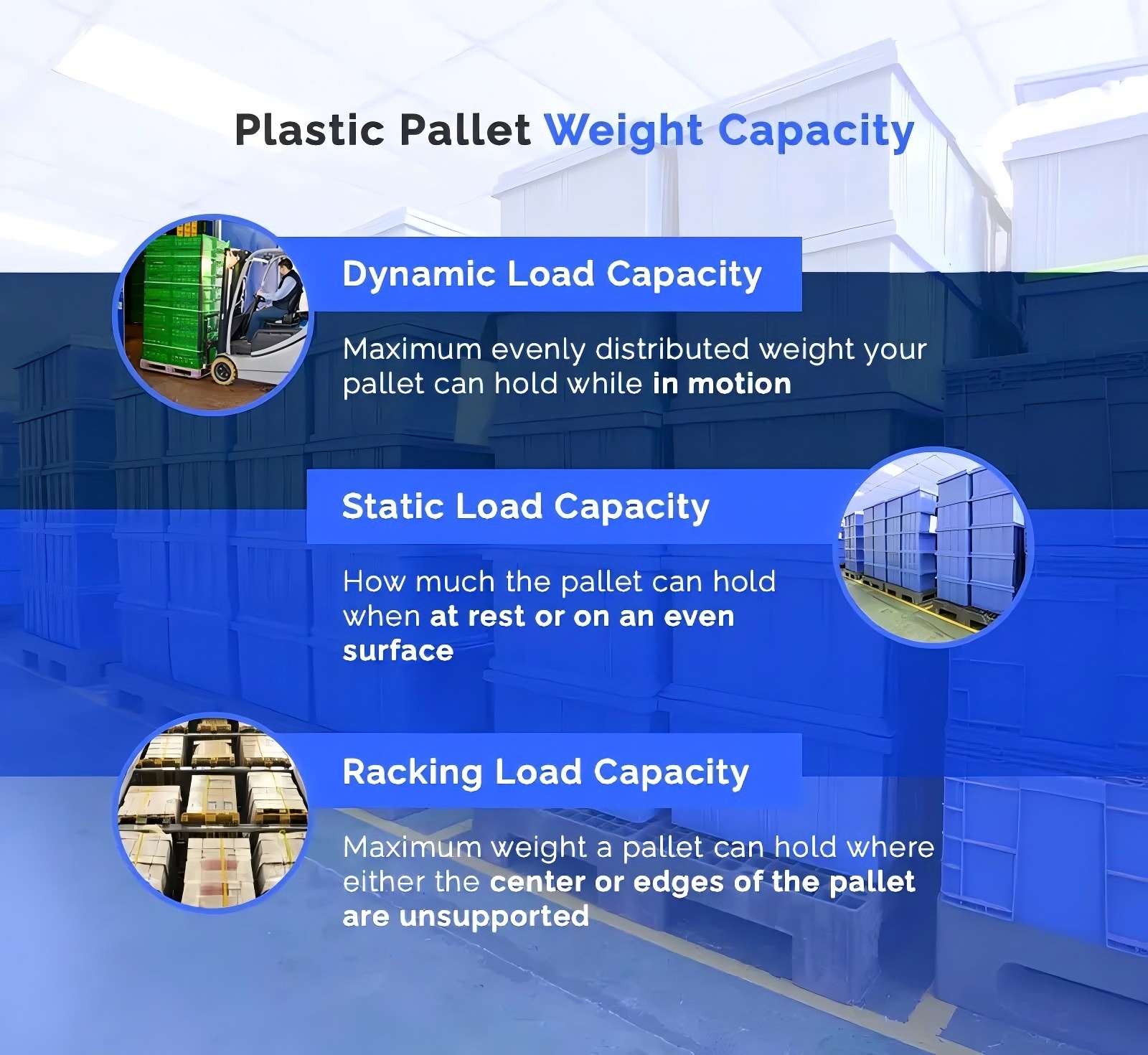
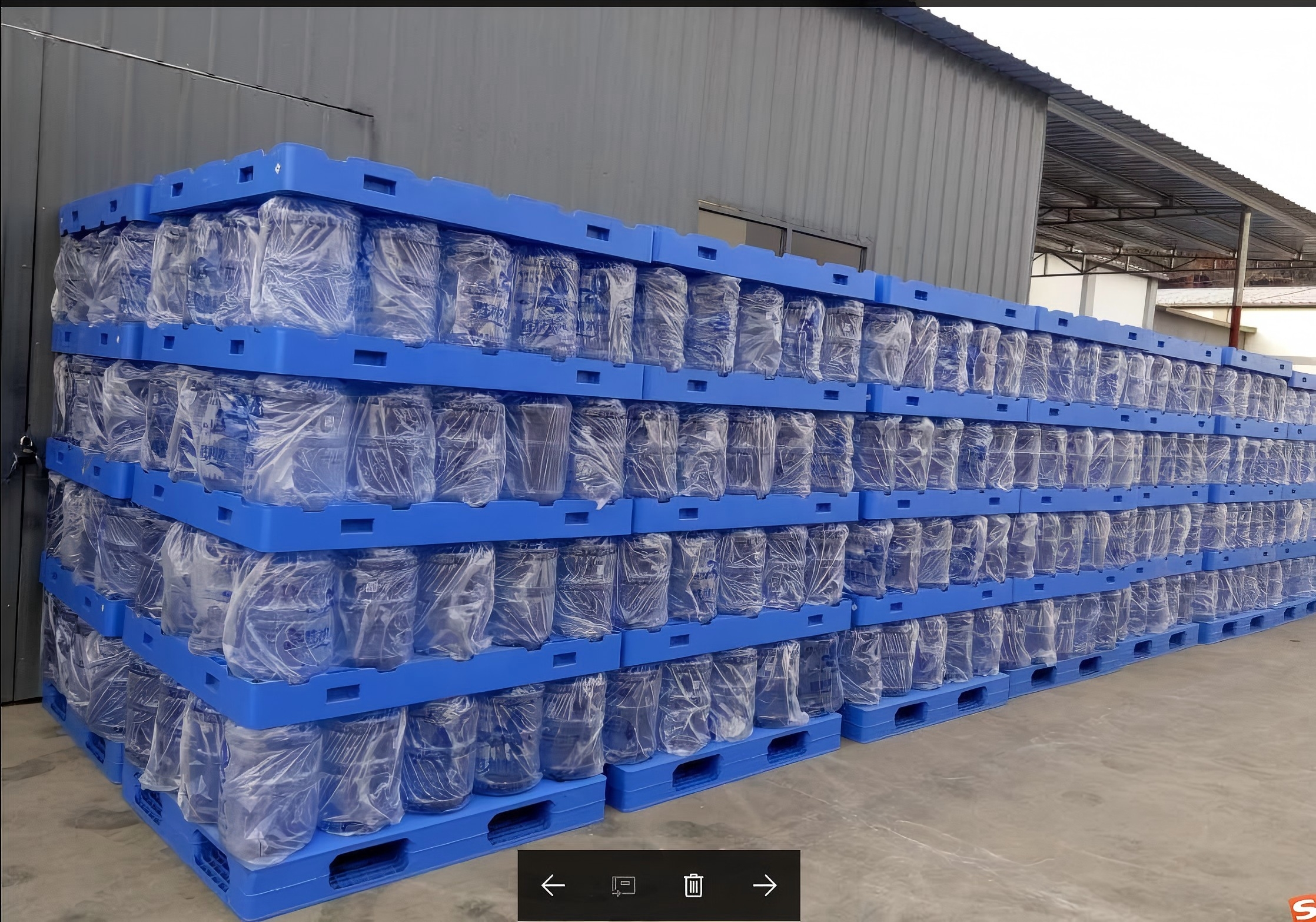
Static Load is the maximum weight a pallet can support while resting on a solid, level surface without being moved. This is usually the highest weight rating on any pallet specification sheet.
It assumes perfect load distribution and zero movement. Static load matters most when pallets are block-stacked.
Lightweight Export Pallets: 1,000 kg – 1,500 kg
Standard Industrial Pallets: 3,000 kg – 4,000 kg
Heavy-Duty Reinforced Pallets: 6,000 kg+
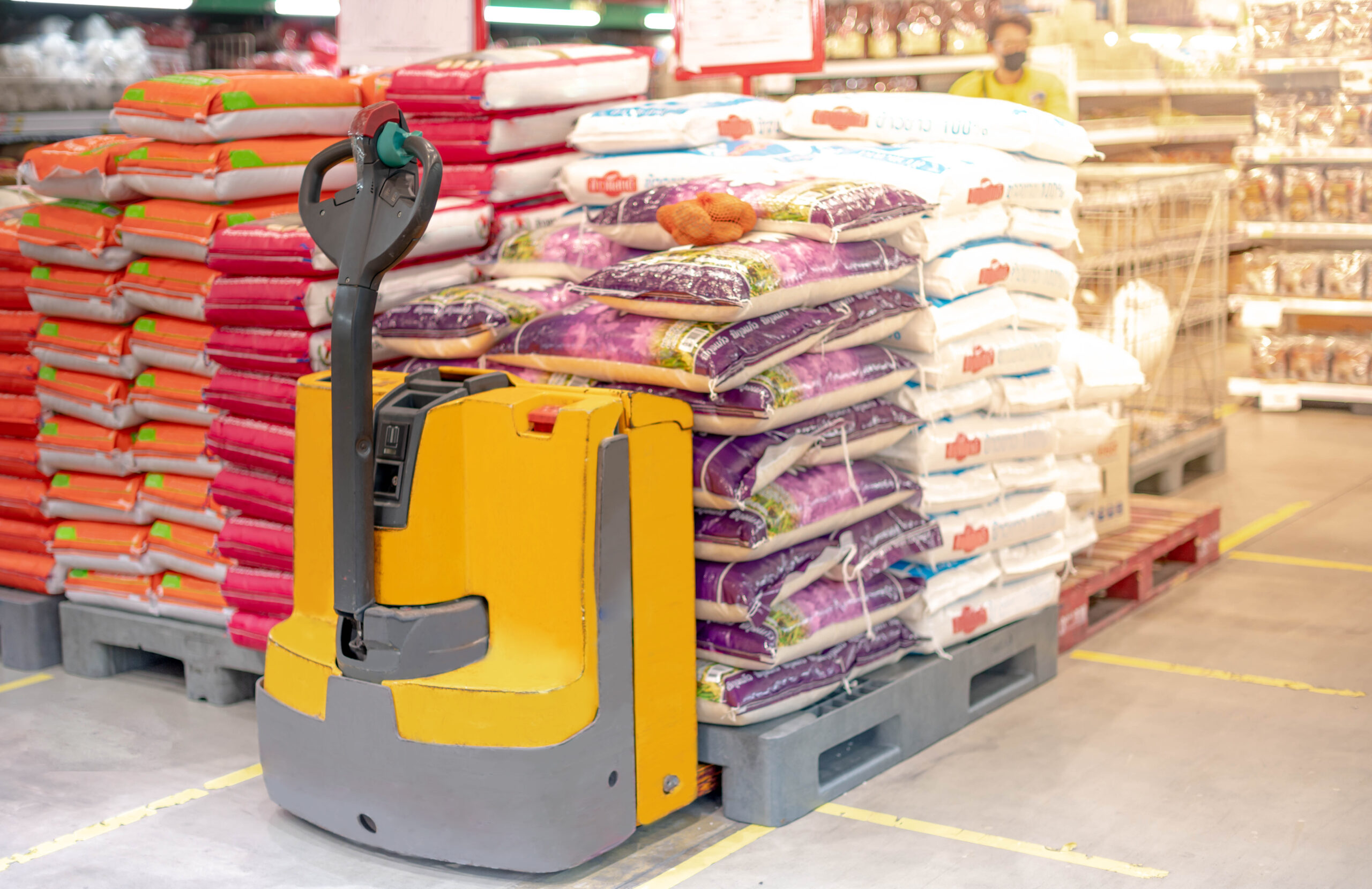
Dynamic Load refers to the maximum weight a pallet can handle while being lifted, transported, or moved by a forklift or pallet jack.
Because movement concentrates stress onto two narrow forks, dynamic load ratings are always lower than static load ratings.
Forklift Speed: Sudden stops or turns increase torque.
Load Stability: Shifting loads increase twisting forces.
Temperature: High heat softens plastic and reduces stiffness.
Nestable Export Pallets: 500 kg – 800 kg
Standard Warehouse Pallets: 1,000 kg – 1,500 kg
Heavy-Duty / Pool Pallets: 1,500 kg – 2,000 kg
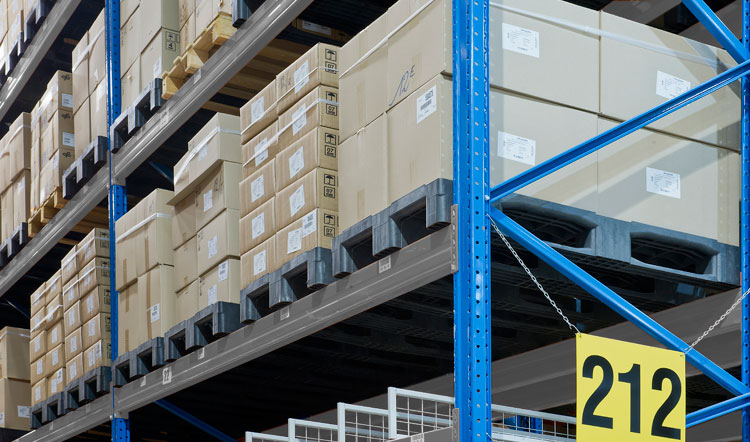
Racking Load (or shelf load) is the maximum weight a pallet can support in an unsupported racking system, where only two edges sit on beams while the middle hangs freely.
This is the most critical load rating for any high-bay warehouse.
Nestable / 9-Leg Pallets: Not suitable for racking (0 kg)
Standard Pallets: 400 kg – 800 kg
Steel-Reinforced Pallets: 1,000 kg – 1,500 kg
| Load Type | Definition | Typical Range | Scenario | Key Risk |
|---|---|---|---|---|
| Static | Stationary on floor | 1,500–6,000 kg | Block stacking | Bottom pallet collapse |
| Dynamic | Moving on forks | 500–2,000 kg | Internal transport | Breaking during lift |
| Racking | Unsupported on beams | 0–1,500 kg | High-bay racking | Falling from beams |
Static load governs multi-layer stacking. If each loaded pallet weighs 800 kg, stacking 4 layers means the bottom pallet must hold 2,400 kg.
Fork misplacement can cause pallets to break even within dynamic load limits due to uneven force concentration.
General-purpose pallets deform over time under heavy racking loads. Pallets with steel reinforcements dramatically reduce long-term deflection.
Material: HDPE offers better performance than recycled PP in cold or high-impact use.
Design: Full-perimeter bases increase stacking stability; 3-runner bases support racking.
Temperature: Higher temperatures reduce load capacity.
ISO Testing: HUADING follows ISO 8611 for load testing.
Huading Industry is a professional manufacturer of plastic pallets, pallet boxes, and reusable logistics packaging. With more than 20 years of experience, we focus on structural safety, real-world durability, and engineering accuracy.
ISO 8611 certified load testing
OEM/ODM customization available
Steel-reinforced pallet options for heavy racking
Virgin or recycled materials based on application
Stable quality for global supply chains
Ready to optimize your warehouse safety and efficiency?
Contact HUADING and let our engineering team evaluate your load requirements and racking system to recommend the safest and most cost-effective pallet solution.
Contact HUADING for Technical Support
