


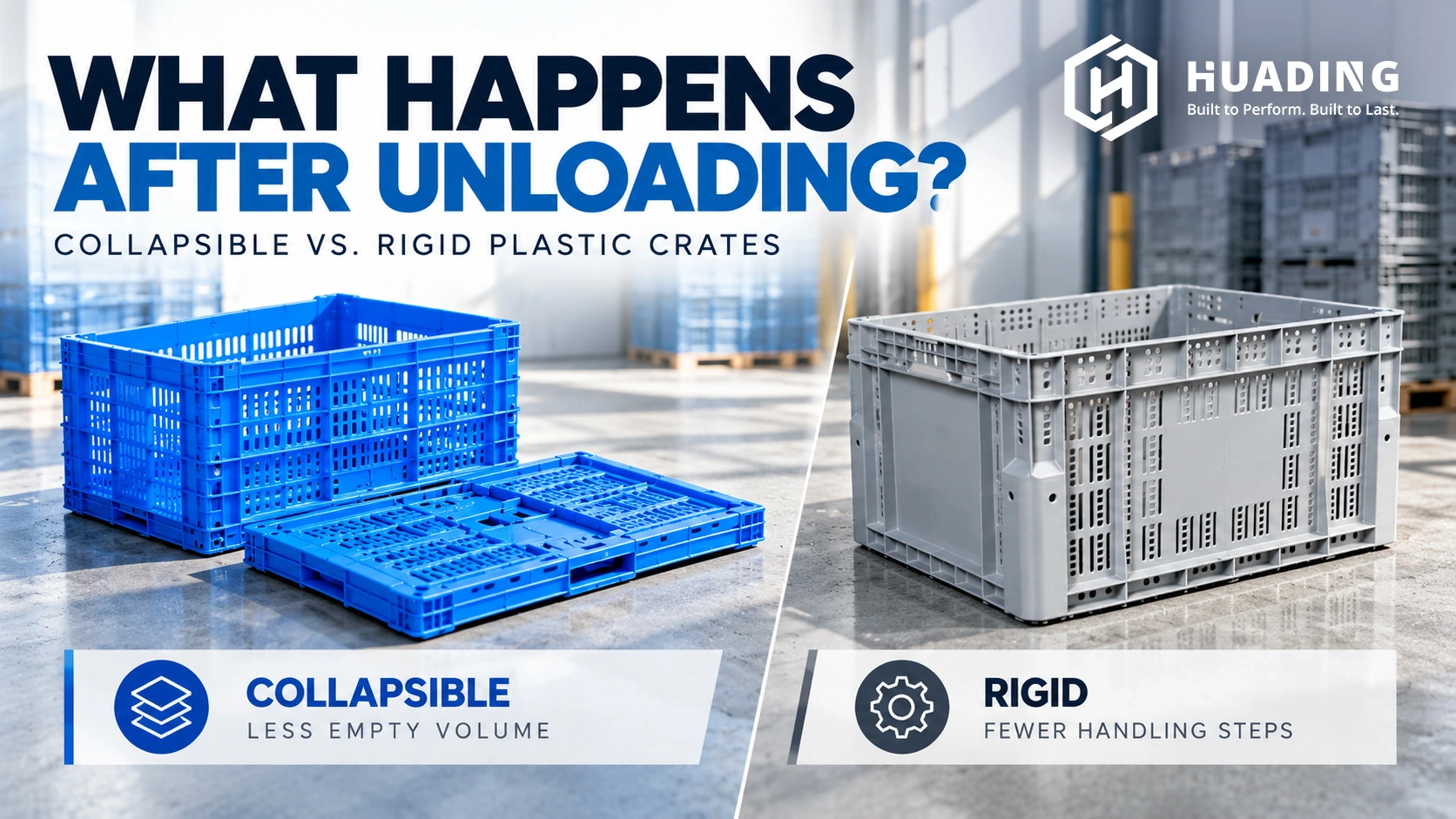
- Collapsible crates
- Less external height when folded
- Rigid crates
- No folding or reassembly step
- Selection basis
- Empty flow, labor and loaded suitability
Two crates can meet the same dimensional and load requirements yet work differently once empty. Collapsible crates trade folding and unfolding work for a more compact empty configuration. Fixed-wall crates avoid those folding steps. The better choice depends on storage space, the return route and how quickly the crate goes back into use.
Where do empty crates go next?
A crate comes off the line, moves to a staging area and waits for collection, return or reuse. More empties arrive, and staff may need to reorganize them to keep the dock clear. That empty stage belongs in the purchasing decision.
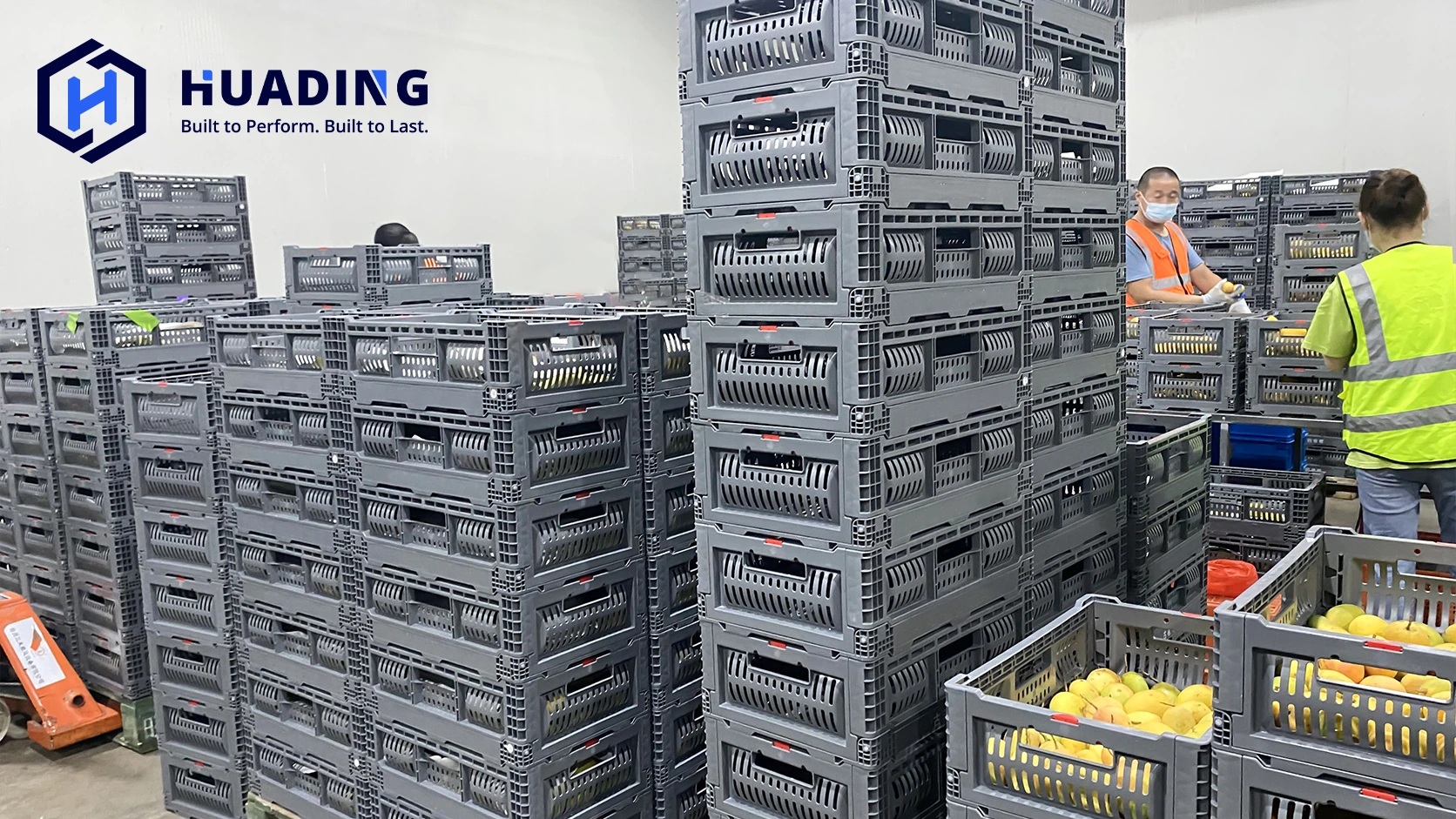
In a distribution network with long return routes, empty crates occupy vehicle space. In a warehouse with limited staging space, their accumulation can interfere with daily handling.
In a factory where crates are emptied and refilled almost immediately, the decision changes. If empty storage is not a constraint, adding folding and unfolding may create work without solving a significant problem.
The useful starting point is the actual empty-crate workflow: where containers wait, how many accumulate, how far they travel and who prepares them for reuse.
Collapsible crates: space saved, handling added
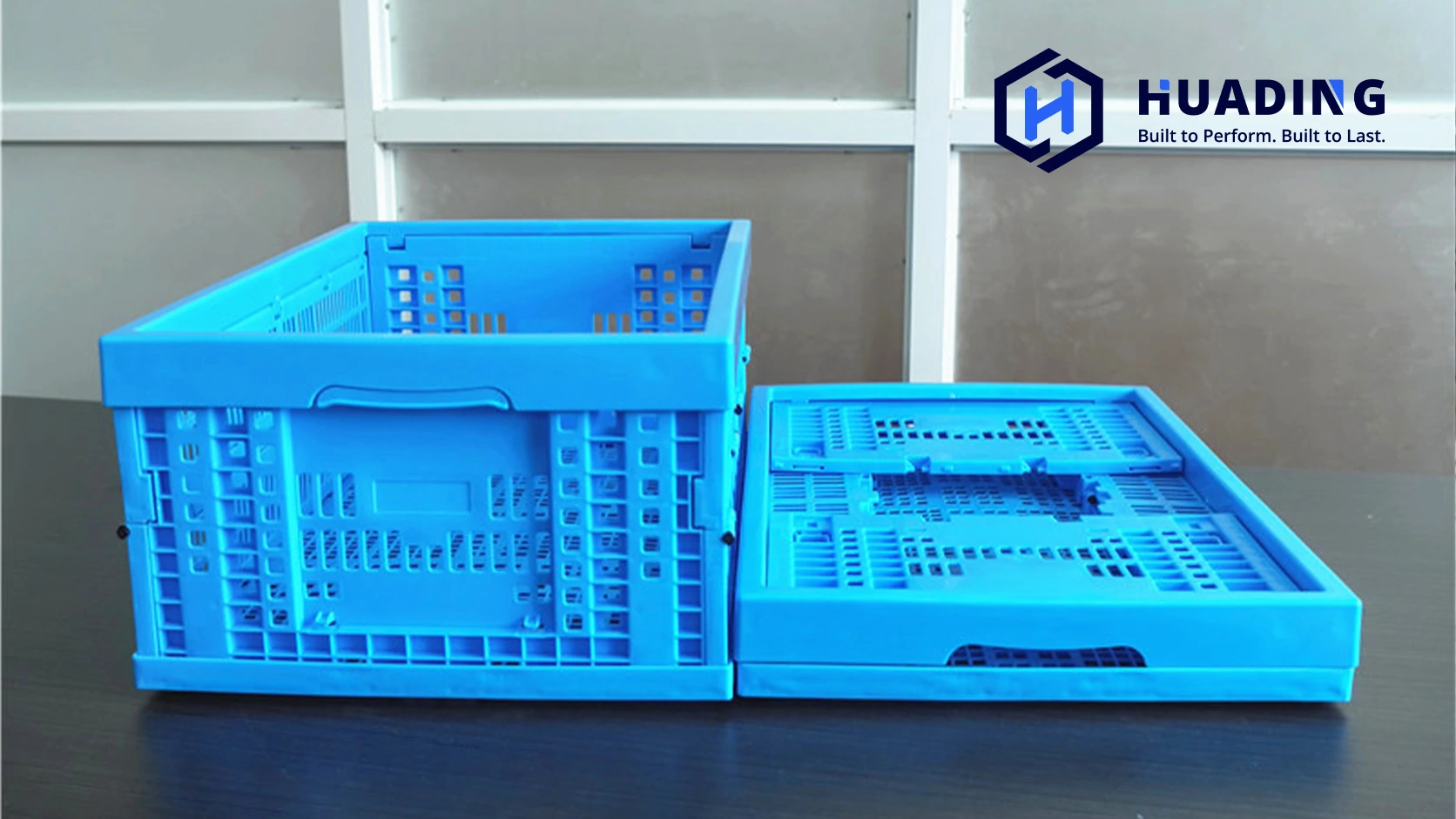
A collapsible crate reduces its external height when the side panels are folded. For large quantities of empty containers, this can reduce the space needed for storage and return handling.
Two examples from HUADING's standard folding range show the structural difference:
Scroll horizontally to see all columns.
| Open external dimensions | Folded external dimensions | External height reduction |
|---|---|---|
| 600 × 400 × 220 mm | 600 × 400 × 50 mm | 77.3% |
| 600 × 400 × 295 mm | 600 × 400 × 70 mm | 76.3% |
Height reduction = (open height − folded height) ÷ open height. The footprint remains 600 × 400 mm. These figures describe external height; they are not measured transport-cost savings or a guarantee of empty units per vehicle. Check actual stacking pitch, pallet arrangement and usable vehicle space.
Someone still has to release the locks, fold the panels and organize the empty crates. Before loading again, staff unfold the crate and secure the structure. Folding joints and locking mechanisms also need to remain functional through repeated use.
Where empty crates accumulate or occupy valuable return-transport space, that extra handling can be worthwhile. Where folding does not solve a meaningful space constraint, it adds another regular task.
Selection principle: a collapsible crate earns its value when the benefit of a compact empty configuration justifies the work required to fold and reopen it.
Rigid crates: when fewer handling steps matter
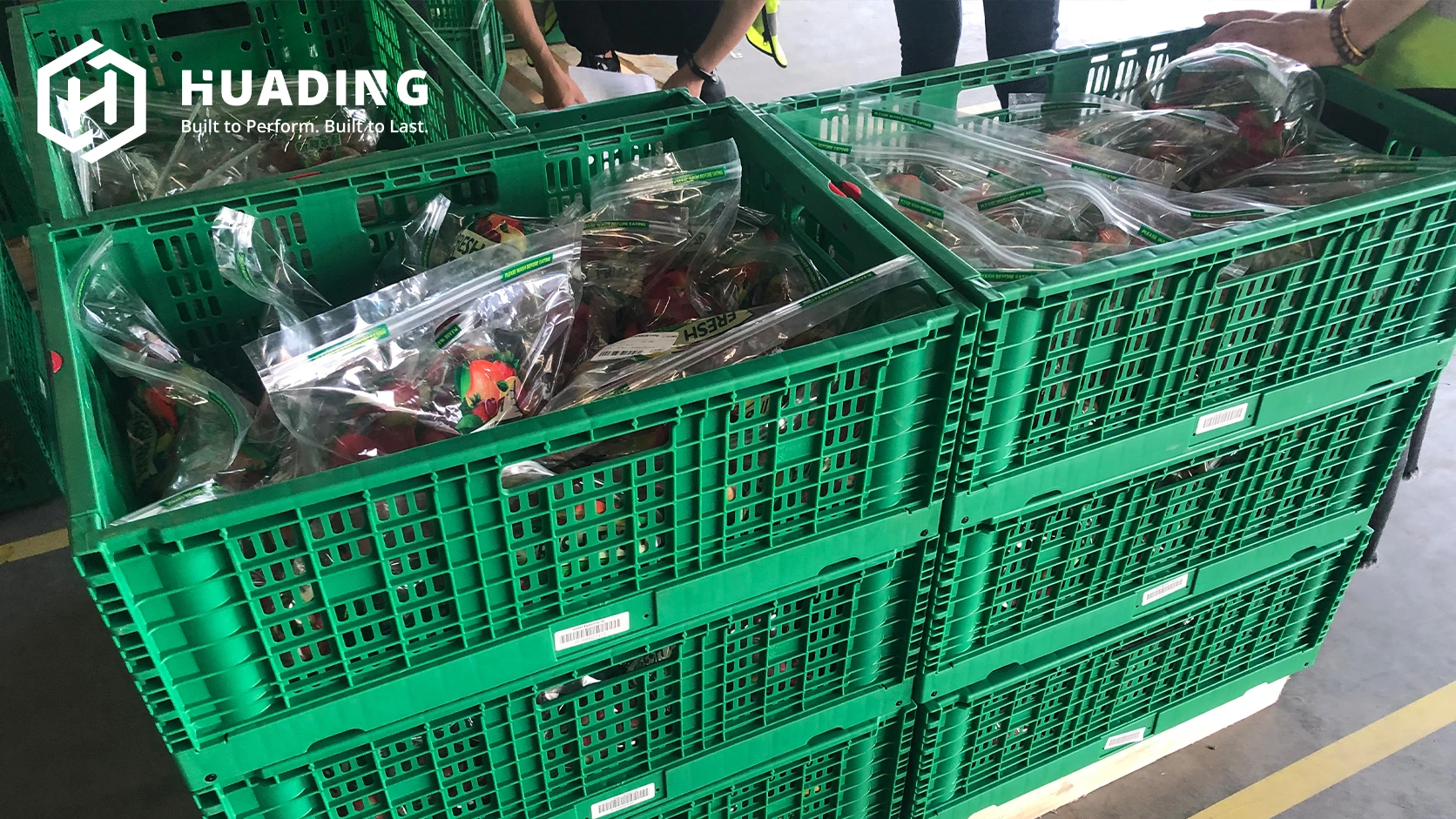
Rigid crates keep their sidewalls upright. There are no panels to collapse and re-erect between loading cycles. For frequent internal deliveries, eliminating those steps can be more useful than reducing empty height.
If a crate returns to the loading point shortly after unloading, it may spend very little time in empty storage. Folding would introduce an extra operation without removing a significant constraint.
Fixed-wall crates avoid the specific wear and inspection points associated with folding mechanisms. Routine checks for damage and cleanliness are still necessary.
Check the actual empty configuration. Some rigid crates are designed to nest. Fixed walls retain their height, but nesting can still reduce the space occupied by a group of empties. Compare the selected model's stacked or nested arrangement rather than assuming every rigid crate requires its full external volume in return transport.
For rigid crates that do not nest, large quantities waiting in storage or returning over long distances make empty volume harder to ignore. The choice depends on which constraint the operation actually needs to solve.
Compare the trade-offs across the full cycle
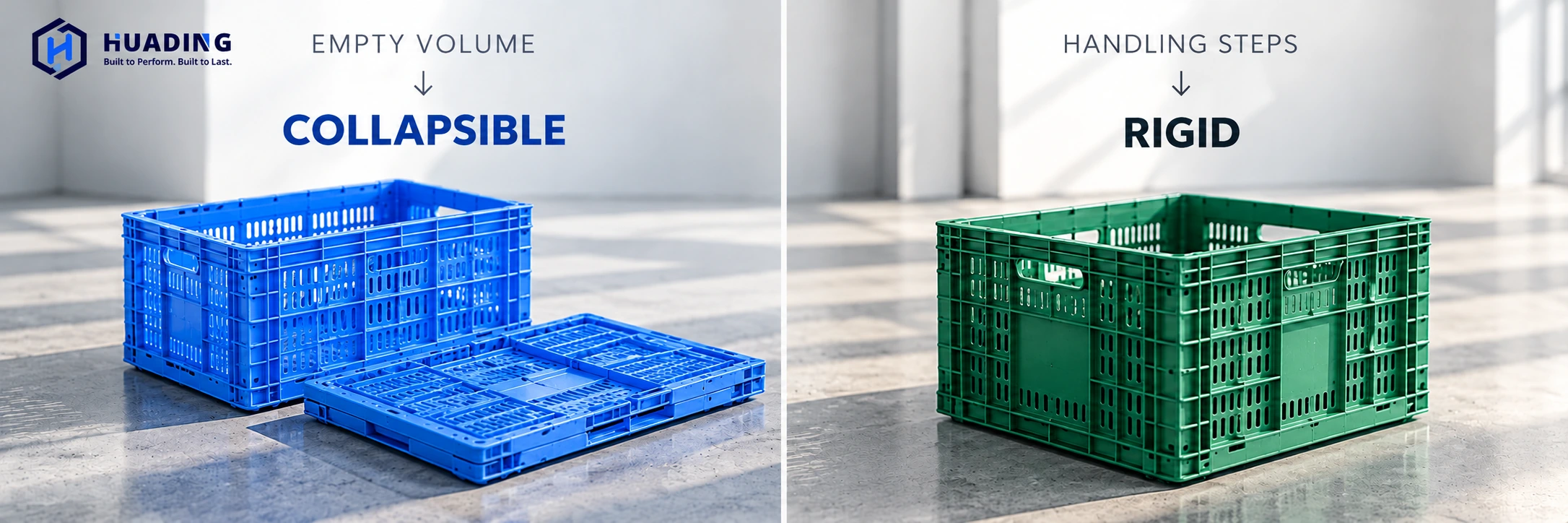
Scroll horizontally to see all columns.
| Decision input | Collapsible crate | Rigid crate |
|---|---|---|
| Empty configuration | Folds to reduce external height | Walls remain upright; check whether the model nests |
| Preparation for reuse | Unfold and secure the panels | No folding or reassembly step |
| Typical reason to consider it | Empty storage or return volume is a real constraint | Frequent reuse and fewer handling steps take priority |
| Inspection points | Structure, folding joints and locks | Structure, damage and cleanliness |
| Loaded suitability | Confirm usable internal dimensions, cargo fit, load and support conditions, stacking and handling method for the specific model. | |
Purchase price alone does not describe the difference. Review storage, return handling, folding labor and preparation for the next load within the same operational boundary. A lower empty height has value only where the operation can use it.
Before you choose, review the empty cycle
Where do empty crates wait?
Identify the staging areas, store backrooms or warehouse locations where they accumulate. Check whether empty volume actually limits usable space.
How many accumulate, and how far do they travel?
A few containers returning across a factory create a different problem from hundreds circulating between distribution sites.
Who handles them before reuse?
Include folding, unfolding, sorting, checking and collection in the workload comparison.
Does the loaded crate fit the job?
Confirm internal dimensions, load per crate, stacking conditions and cargo requirements before comparing empty configurations.
If empty volume is the main bottleneck, review collapsible options and the actual folded arrangement. If handling time is the main bottleneck, consider whether a fixed-wall crate avoids an unnecessary operation. Where a rigid option nests, include that configuration in the comparison.
HUADING offers standard collapsible and rigid plastic crate options for warehouse storage, factory handling and distribution. The aim is to match the structure to the operation and compare suitable standard options on a consistent basis.
Comparing collapsible and rigid plastic crates?
Share the loaded requirements and the empty-crate route. Our team can help you compare standard options for your storage and handling process.
Discuss your crate requirementsUseful details for our team
- Required external and usable internal dimensions
- Load per crate, cargo type and stacking conditions
- Empty storage time, return distance and handling method
- Estimated quantity and delivery destination