


The customer had already made the obvious packaging upgrade: wooden crates to reusable plastic bins. But changing the material did not eliminate the packaging problem. Under repeated loading, stacking, forklift handling, cold-storage rotation, and transport — the plastic bins kept deforming and cracking. The real question was no longer wood or plastic. It was: is this container structurally suitable for the way it will actually be used?
The Customer's Packaging Problem
Moving away from wooden crates was a logical step. The customer needed reusable packaging that could move repeatedly through apple packing, storage, handling, transport, empty return, and the next packing cycle. But the plastic bins already in use were not maintaining their shape through those repeated cycles.
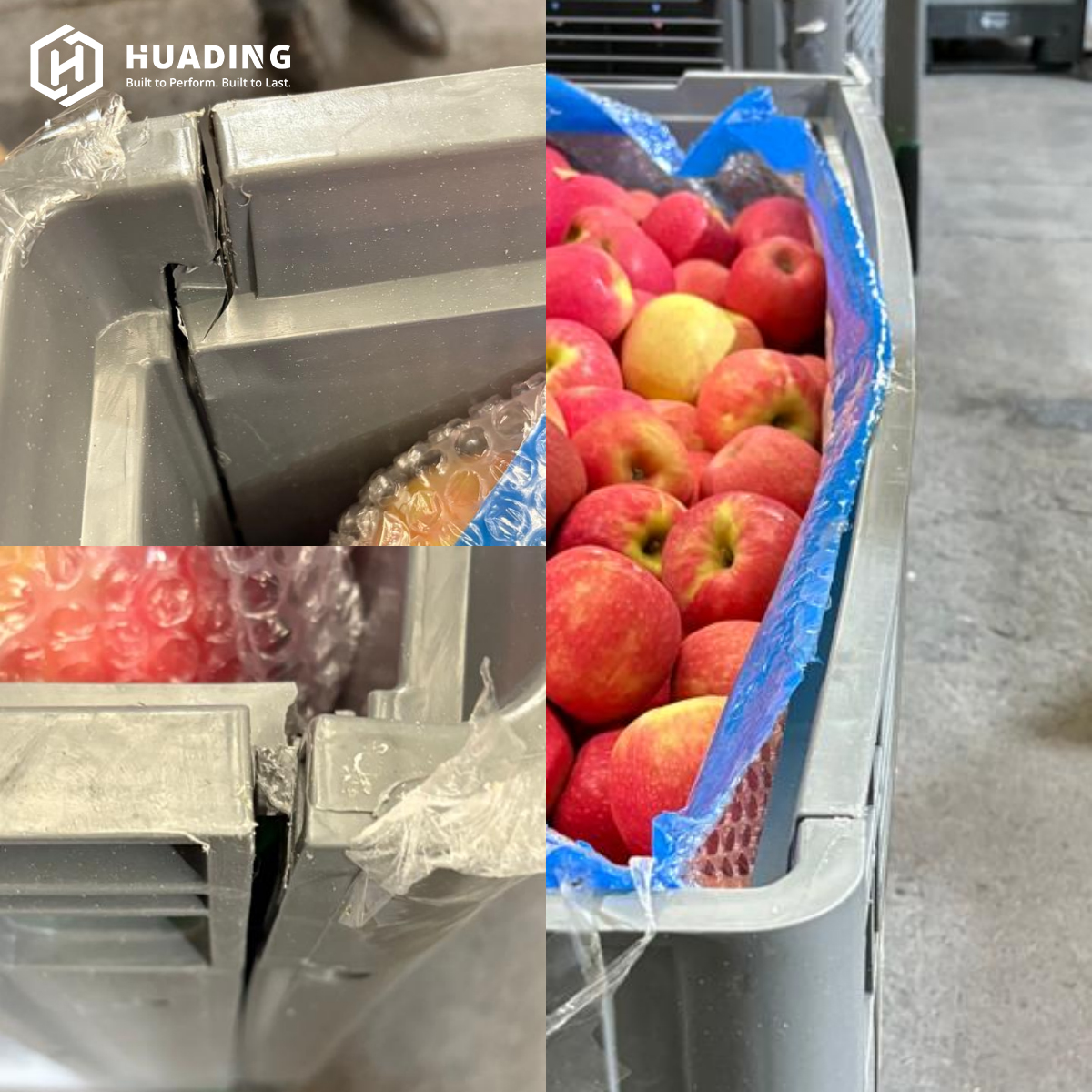
Walls and overall structure gradually distorted under repeated load and stacking. Deformation affects stacking consistency, handling stability, container alignment, and reliability across subsequent cycles — not only appearance.
Cracks appeared after repeated use cycles. These were not isolated defects — they were signs that the container structure was not holding up under the way the packaging was actually being used at this Chile-based facility.
Why Simply Switching to Plastic Was Not Enough
The customer had moved from wooden crates because of familiar limitations — higher repeated packaging costs, relatively short service life, and greater material consumption over repeated export cycles. Switching to reusable plastic was logical. But the experience showed that changing the material alone does not guarantee better performance.
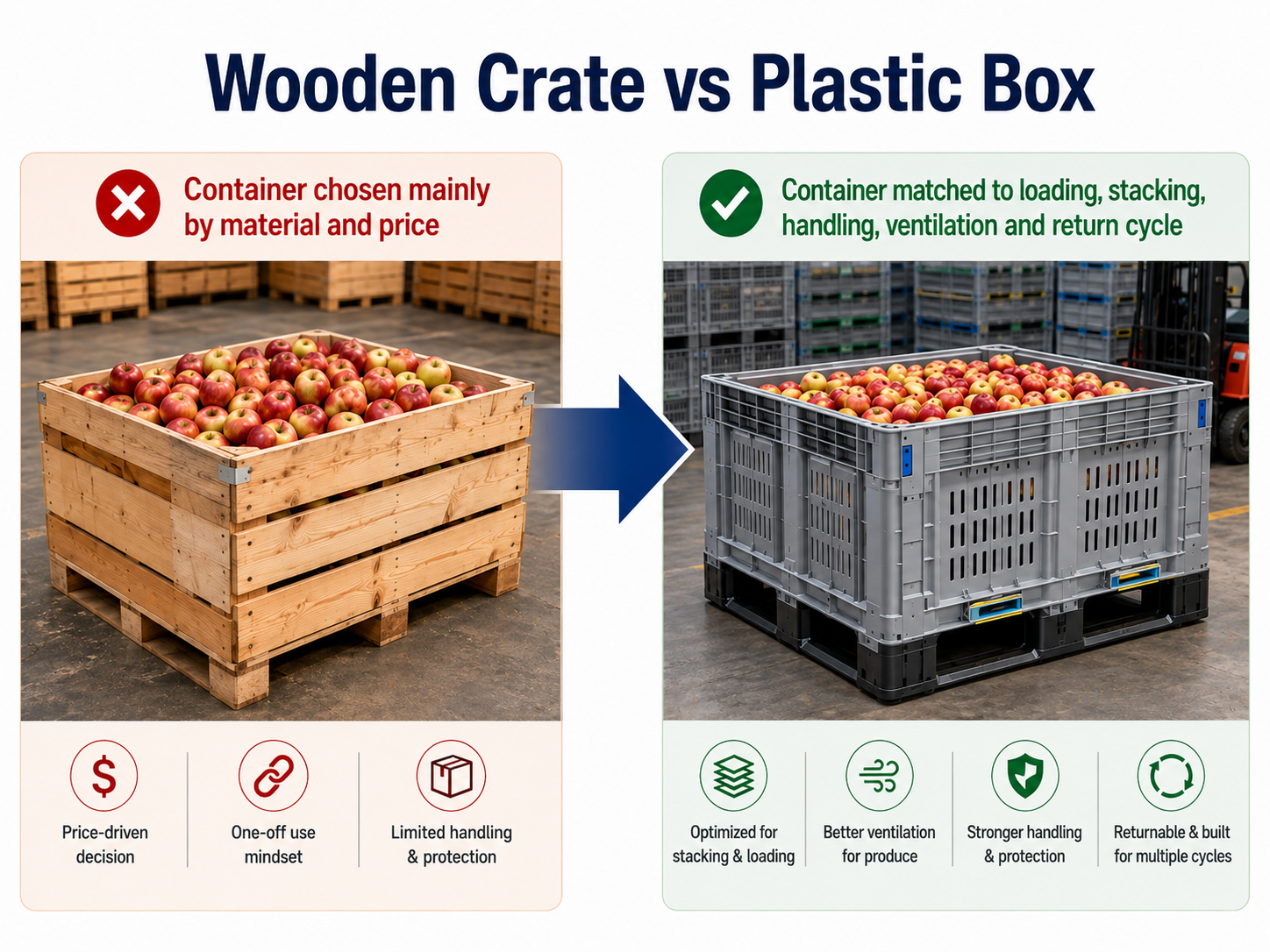
Two plastic pallet containers can share similar dimensions and still perform very differently over repeated logistics cycles. The difference tends to come from:
How well the side walls resist deformation under load, stacking pressure, and repeated handling without losing their original geometry
The pattern and depth of structural ribs that distribute load and prevent localized stress concentration across the container body
How the base and side connections are designed to maintain integrity through repeated cycles of loading, stacking, movement, and reuse
Whether the upper and lower contact geometry is designed to transfer stacking load reliably without applying point stress that causes progressive deformation
HUADING's Reinforced Pallet Container: Matching the Application
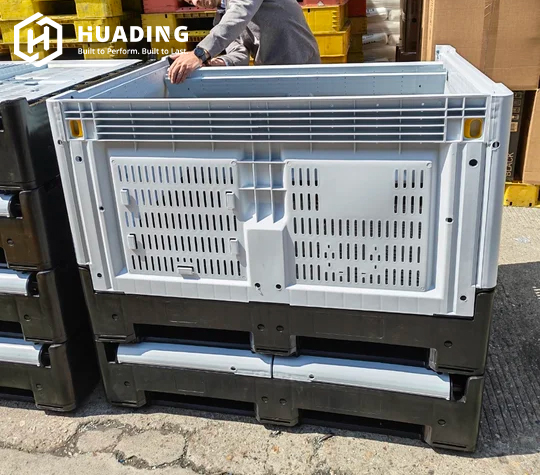
Huading reviewed the customer's actual operating conditions in Chile — apple loading, repeated stacking, forklift handling, cold-storage rotation, transport, and empty-container return — and matched the application to a reinforced foldable pallet container in the 810 size range.
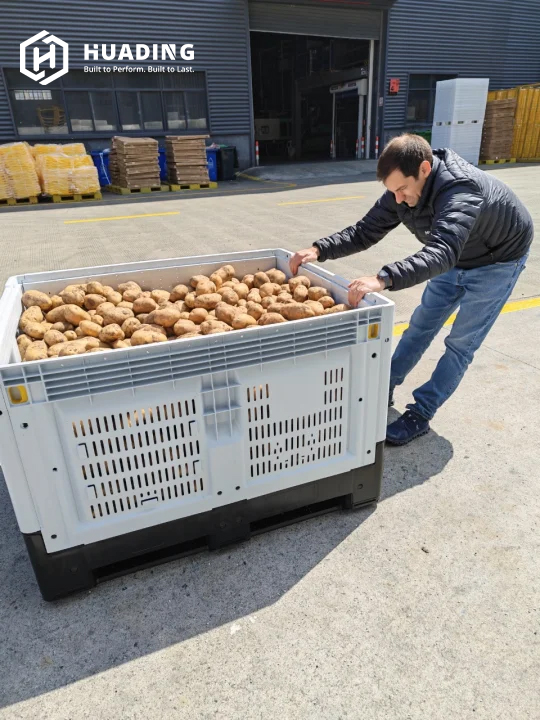
The goal was not simply a higher load rating on paper. It was a more rigid and reinforced structure that could remain stable through repeated handling cycles. Four specific features addressed the customer's application:
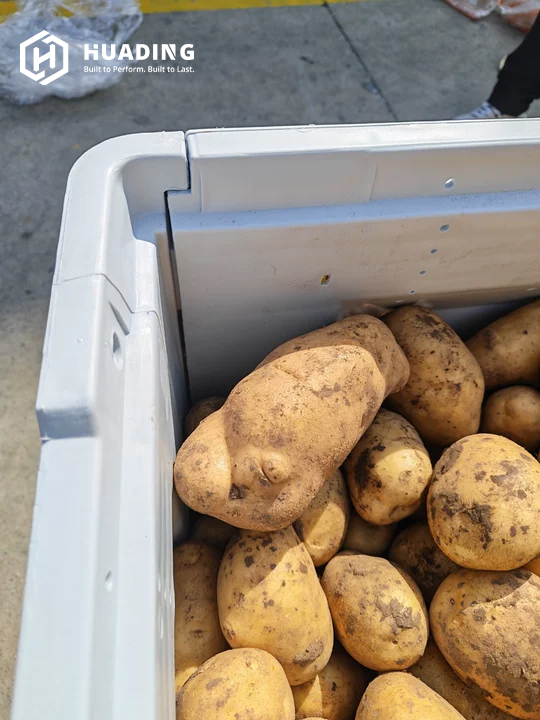
The reinforced rib configuration adds structural support across the container, so it can move between loaded stacking, forklift handling, storage, transport, unloading, and reuse without gradually losing its shape.
Before the customer moved forward, the container was tested to a 403 kg static load as part of the verification process — confirming suitability for the intended loaded application before daily use began.
Apples continue to respire after harvest, so airflow matters throughout packing and cold-chain handling. The open-grid side walls help maintain airflow around the packed fruit during storage and transport.
After unloading, the sidewalls fold down, reducing the space empty containers occupy during storage and return transport — important for an export operation with repeated inbound and outbound cycles.
Designed Around the Full Handling Cycle
A reusable pallet container should not be evaluated only when fully loaded and stationary. It has to keep performing across the whole cycle — each stage placing a different demand on the container:
What Changed for the Customer in Chile
The important change was not another material conversion. The customer had already moved from wood to plastic. This time, it was a shift from a plastic bin that kept deforming and cracking to a reinforced foldable pallet container better matched to the actual application.
Before — Non-Reinforced Plastic Bins
- Progressive deformation under repeated loading and stacking
- Cracking appearing after multiple use cycles
- Structural instability affecting stacking consistency
- Container reliability declining over successive cycles
- Solid-wall design limiting airflow during cold-chain handling
After — Huading Reinforced Foldable Container
- Reinforced rib configuration maintains geometry through repeated cycles
- Verified to 403 kg static load before deployment
- Deformation and cracking problems have not recurred since the switch
- Ventilated mesh walls support airflow during packing and cold storage
- Foldable sidewalls reduce empty return space and storage footprint
It needs the right structure for the way it will actually be used.
Why This Case Matters Beyond One Chilean Apple Packer
Many packaging decisions stop too early. A company replaces wood with plastic and assumes the main problem is solved. But if the replacement still deforms, loses stability, or cracks — the selection still does not match the application.
The more useful comparison is not wood vs. plastic. It is a container selected mainly by material and price vs. a container matched to the actual loading, stacking, handling, ventilation, and return cycle.
If your plastic pallet containers are already reusable but are still deforming, losing shape, or cracking after repeated cycles — does the container remain stable after repeated loading and stacking? Can it tolerate repeated handling without gradually losing its shape? And does it still work efficiently after unloading and during empty return?
Sourcing Containers for Fresh Produce or Repeated Export Cycles?
Huading supplies plastic pallets, foldable crates, and pallet containers for warehousing, logistics, fresh produce, and export packaging.
Share your application — loading conditions, stacking method, handling environment, and return cycle — and Huading can help evaluate whether the container structure matches the way it will actually be used.
Contact Us →