Views: 7 Author: Site Editor Publish Time: 2026-03-11 Origin: Site

For many years, industrial packaging relied on traditional solutions such as wooden crates, metal containers, or one-piece plastic pallet boxes. These packaging types may still work for basic transport and storage, but modern supply chains now demand more than simple protection. Today, companies are under pressure to reduce logistics costs, improve warehouse efficiency, and make packaging more reusable. In this context, modular pallet box systems are becoming an increasingly practical alternative. Traditional packaging often creates hidden inefficiencies in the supply chain. Wooden crates may require fumigation for export and are not always easy to reuse. Metal containers are durable, but they are usually heavy and expensive. Solid plastic pallet boxes can perform well in storage and transport, but they often take up too much space during return logistics. The result is a packaging system that can protect products, but may not support the operational flexibility companies need today. As return transport, storage utilization, and overall packaging cost become more important, businesses are starting to question whether traditional packaging is still the right long-term choice. A modular pallet box is a packaging system assembled from multiple standardized parts rather than formed as one fixed unit. In most cases, the system includes: A pallet base One or more sleeve panels or side walls A top lid These components can be combined to create different packaging configurations for different applications. The same base may be used as a pallet in one scenario, then turned into a pallet box simply by adding sleeve panels and a lid. This modular design gives companies more flexibility, easier maintenance, and better control over long-term packaging use. Instead of replacing an entire box after damage, companies can often replace only one component, such as the sleeve or lid. That makes modular pallet boxes more practical for repeated industrial use. One of the biggest advantages of modular pallet boxes is that many designs can be collapsed when empty. This significantly reduces the space required in return logistics, which helps lower transportation costs and improves container utilization. Traditional packaging is often judged by initial purchase price alone. But modular systems offer long-term cost advantages because individual parts can be reused or replaced separately. This reduces full-unit replacement frequency and helps businesses manage packaging investment more effectively over time. In many industries, companies handle products with different dimensions, weights, and protection requirements. Modular packaging makes it easier to adjust the system according to product needs, making it more versatile than fixed packaging designs. Modular pallet boxes are usually designed around standard pallet sizes, making them compatible with forklifts, warehouse racks, and automated handling systems. This helps improve storage organization and daily handling efficiency. As more companies focus on sustainability, reusable packaging is becoming an important part of supply chain planning. Modular pallet box systems support repeated use and longer packaging life cycles, which makes them a more sustainable alternative to disposable or short-life packaging options. Modular pallet boxes are especially useful in industries where packaging moves repeatedly between suppliers, plants, warehouses, and distribution centers. Common application areas include: Automotive industry: for returnable packaging of components and parts Industrial manufacturing: for durable handling of heavy or irregular products Electronics and battery logistics: for stable and reusable transport packaging Warehouse distribution: for standardized storage and transport efficiency In these sectors, packaging is no longer viewed only as a transport tool. It is part of the logistics system itself, and modular solutions help companies manage that system more efficiently. Choosing the right modular pallet box is not only about size. Buyers should also evaluate how well the packaging system fits their actual logistics operation. Check whether the pallet base is suitable for the required load and handling method Review sleeve durability and overall structural stability Make sure the system matches your warehouse and transport dimensions Consider how easily components can be replaced or reused Choose a supplier with practical experience in industrial and export packaging A well-designed modular pallet box system can support better logistics performance, reduced packaging waste, and more efficient long-term operations. As supply chains become more demanding, traditional packaging solutions are showing clear limitations. Companies today need packaging that is not only strong, but also flexible, reusable, and efficient in storage and return logistics. That is why modular pallet boxes are replacing traditional packaging in more and more industries. They offer a practical way to reduce long-term costs, improve warehouse handling, and support reusable packaging systems across modern supply chains. Huading Industry provides reusable plastic packaging solutions for industrial storage, transport, and returnable logistics. Contact our team to discuss the right modular pallet box system for your application.The Problem with Traditional Industrial Packaging
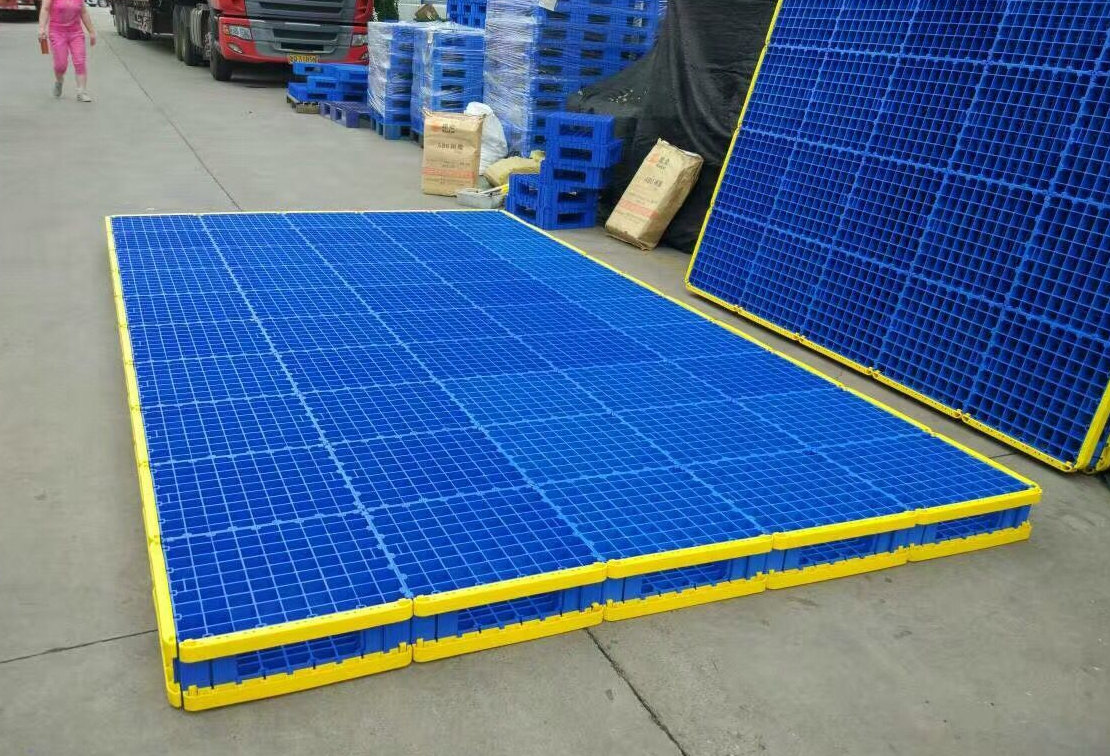
What Are Modular Pallet Boxes?
Why modular design matters
Key Advantages of Modular Pallet Boxes
1. Better space efficiency in return transport
2. Lower long-term packaging cost
3. More flexible for different product needs
4. Easier warehouse handling
5. Reusable and more sustainable
Industries That Benefit Most from Modular Pallet Boxes
How to Choose the Right Modular Pallet Box
Conclusion
Looking for Reliable Modular Pallet Box Solutions?

