Views: 73 Author: Site Editor Publish Time: 2026-07-13 Origin: Site

A food packaging customer recently asked two questions that are becoming increasingly common in pallet sourcing discussions. They were evaluating a 1200 × 800 × 150 mm smooth-surface hygienic H1 pallet — and their questions went beyond price and dimensions.
| "Does this pallet carry GS1-compatible identification?" | "Can it work with our automated scanning and warehouse process?" |
At first, these sound like questions about a barcode. They are not. They are questions about whether the pallet can be identified, verified, and managed inside the customer's supply chain system.
Food packaging buyers are no longer asking only: "How much does it cost?" They are also asking: "Can this pallet fit into our traceability and automation workflow?"
That is where the pallet industry is changing.

For many years, plastic pallets were mainly evaluated by physical specifications. These factors still matter and always will:
| Traditional Evaluation
| Now Also Required
|
A pallet may meet the required dimensions and still create extra work at the receiving dock. If the pallet cannot be identified clearly, warehouse teams may need manual checks. If the marking does not match the customer's scanning process, the pallet may become an exception inside an automated workflow.
This is why identification and traceability are moving from "nice to have" to a core part of the purchasing discussion.

GS1 standards are widely used in retail, logistics, and manufacturing to support product identification, barcodes, and supply-chain data exchange. In food and packaging supply chains, this kind of identification is becoming less optional and more operational.
As warehouses become more automated — with conveyor sorting, robotic picking, AGVs, and automated storage and retrieval systems — equipment does not only need to move a pallet. It also needs to recognize it.
A GS1-compatible identification approach can help a pallet support scanning, logging, and traceability workflows at key points such as receiving, storage, dispatch, and internal warehouse movement. For food producers and packaging buyers, this can also support recall readiness, supplier review, and regulatory compliance checks in export markets.
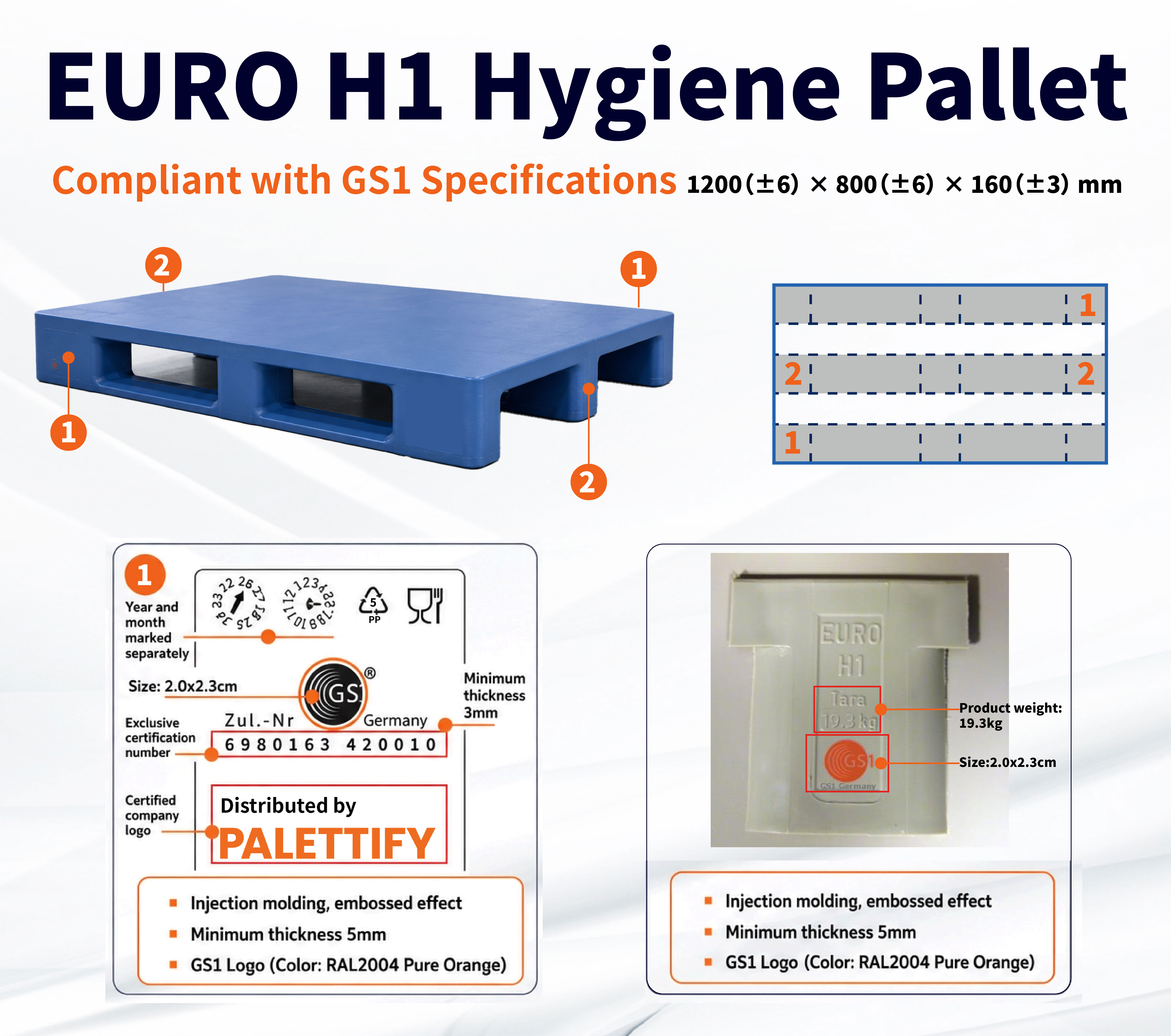
For food logistics buyers, a hygienic pallet should not rely only on a supplier's self-declaration. It should be supported by a clearer approval and manufacturing basis.
Huading holds a GS1 Germany license number related to EURO H1 hygienic pallet production. This license is connected with manufacturing equipment and manufacturer systems that meet EURO H1 requirements. That means the value is not only in the finished pallet — it is also in the production process behind the pallet.
For customers, this creates a practical assurance. Huading's hygienic pallets are supplied with a clearer basis for identification, production control, and supplier review from the beginning of the project. The value connects the pallet to:
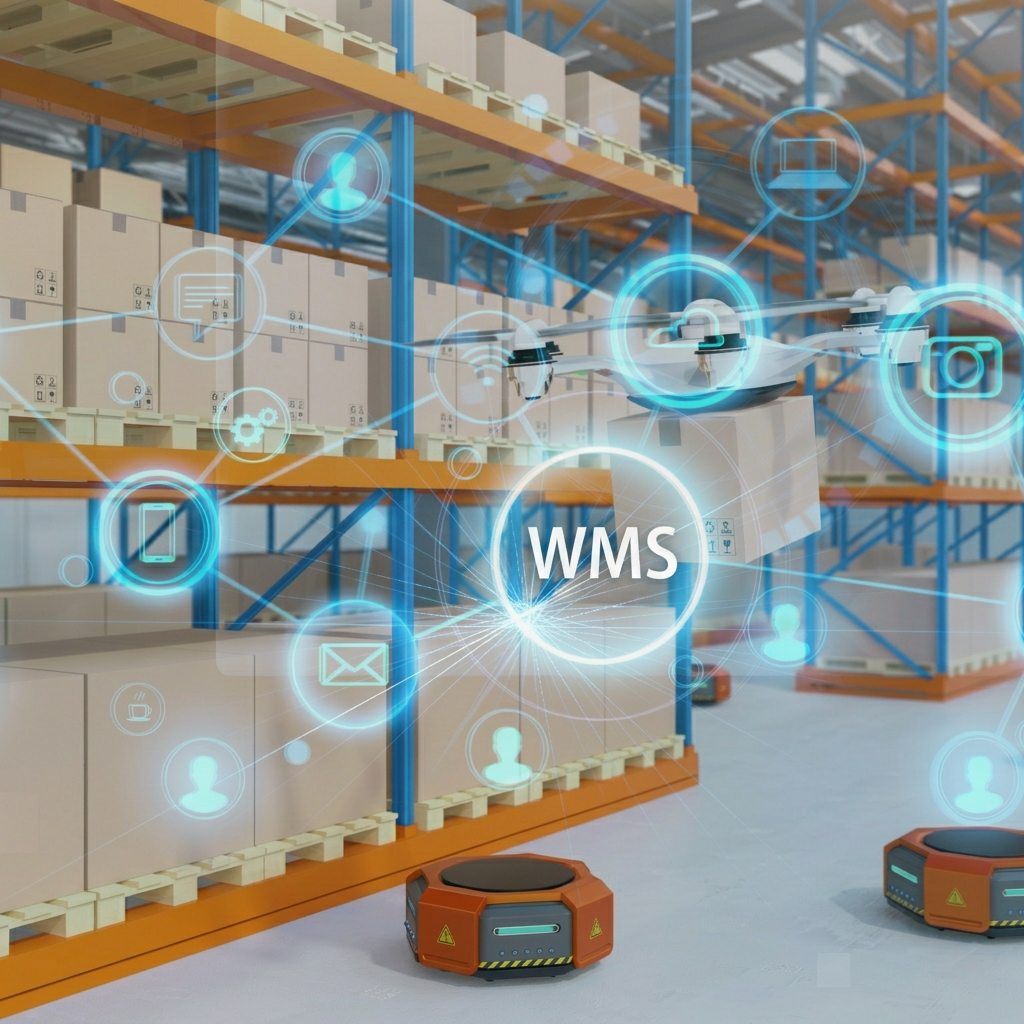
For customers evaluating hygienic pallets, identification and documentation can affect daily operations — not only the initial procurement decision. GS1-related identification and approval documentation may help support:
|
|
This does not mean that every pallet will automatically connect to every warehouse system. The customer's scanner, WMS, label-reading method, warehouse layout, and data rules still need to be confirmed. But it does mean the pallet should be reviewed as part of the system from the beginning.
Before approving a hygienic pallet for food packaging or automated warehouse use, buyers should not stop at size and load capacity. Five practical points should be confirmed:
The future of food logistics pallets will not be defined only by unit price. It will also be defined by whether the pallet can support hygiene requirements, supplier verification, scanning, traceability, and automated warehouse workflows.
Food packaging buyers need pallets that can carry goods. But they also need pallets that can be recognized, checked, and managed inside a modern supply chain.
That is why Huading supports customers not only with hygienic pallet supply, but also with documentation review, sample validation, and application discussion before mass production — because the most practical pallet solution is the one that works inside the customer's full supply chain process, not only on the warehouse floor.
Huading can help review your pallet specification, identification requirements, and application conditions — including GS1 compatibility, EURO H1 documentation, and sample validation before mass production.
Contact Us →
