


Many plastic pallets are labeled "suitable for cold storage." But once they enter low-temperature, racking and repeated-handling environments, that label alone does not tell you whether performance will remain stable.
Switching from wood to plastic can solve several issues related to moisture absorption, cleanability and dimensional consistency. But switching to plastic is only the first step in cold-storage pallet selection.
If two plastic pallets look similar and both are described as suitable for cold storage, will they actually perform the same once temperatures drop? Not necessarily.
1. Plastic vs. Wood Is Only the First Decision
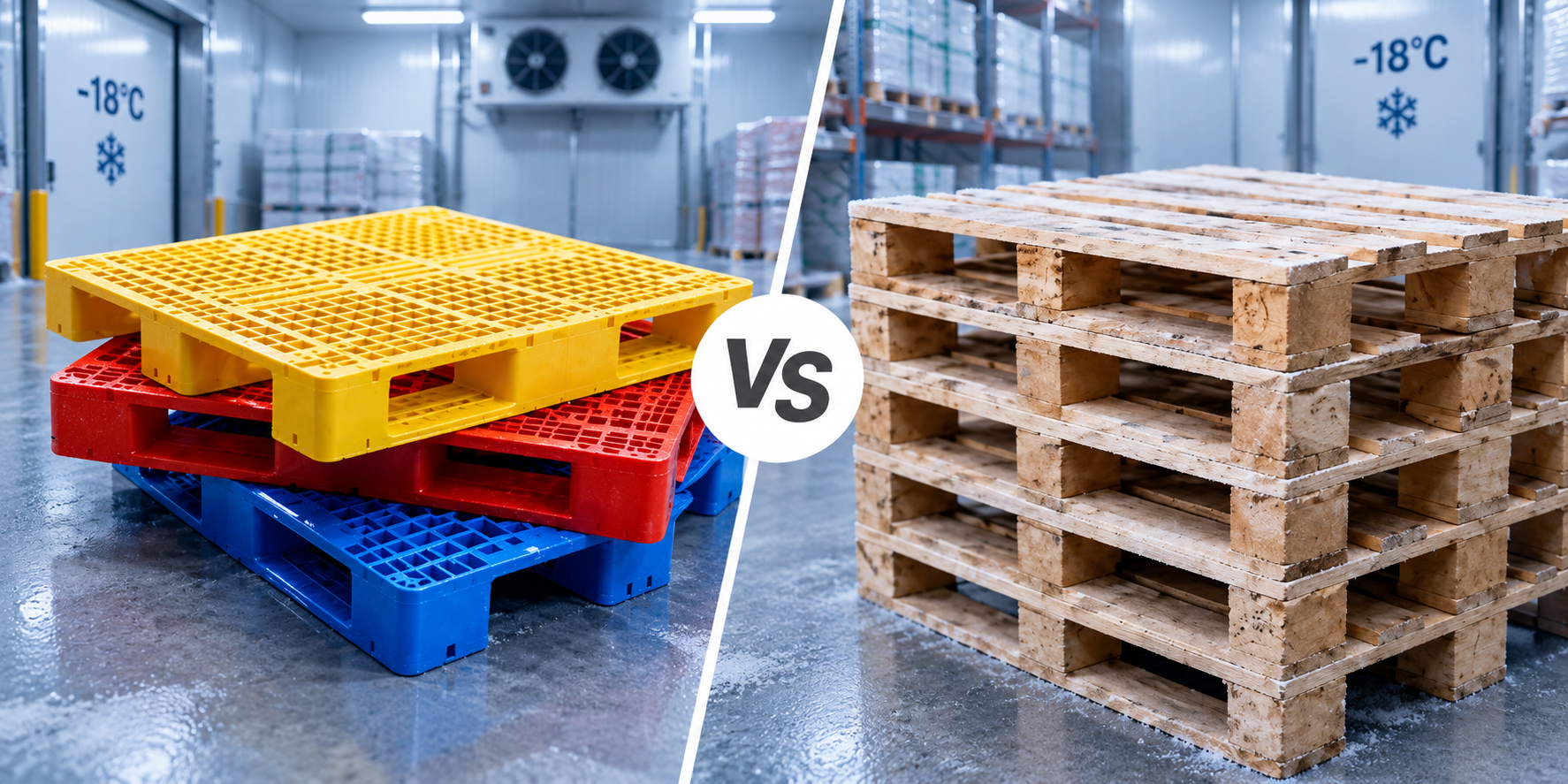
In refrigerated and frozen environments, moisture and condensation are difficult to avoid.
Wood is naturally porous and can absorb moisture. Repeated exposure to humidity and temperature changes may affect its weight, dimensions and overall condition.
Plastic does not absorb moisture in the same way, which is one reason plastic pallets are widely used in temperature-controlled logistics.
But this comparison can create another misconception:
That is where pallet selection becomes more complicated. Once the decision has moved from wood to plastic, buyers still need to determine which plastic pallet actually fits the real operating conditions.
2. Low Temperature Often Exposes Weak Points That Already Exist
One of the first questions buyers ask is:
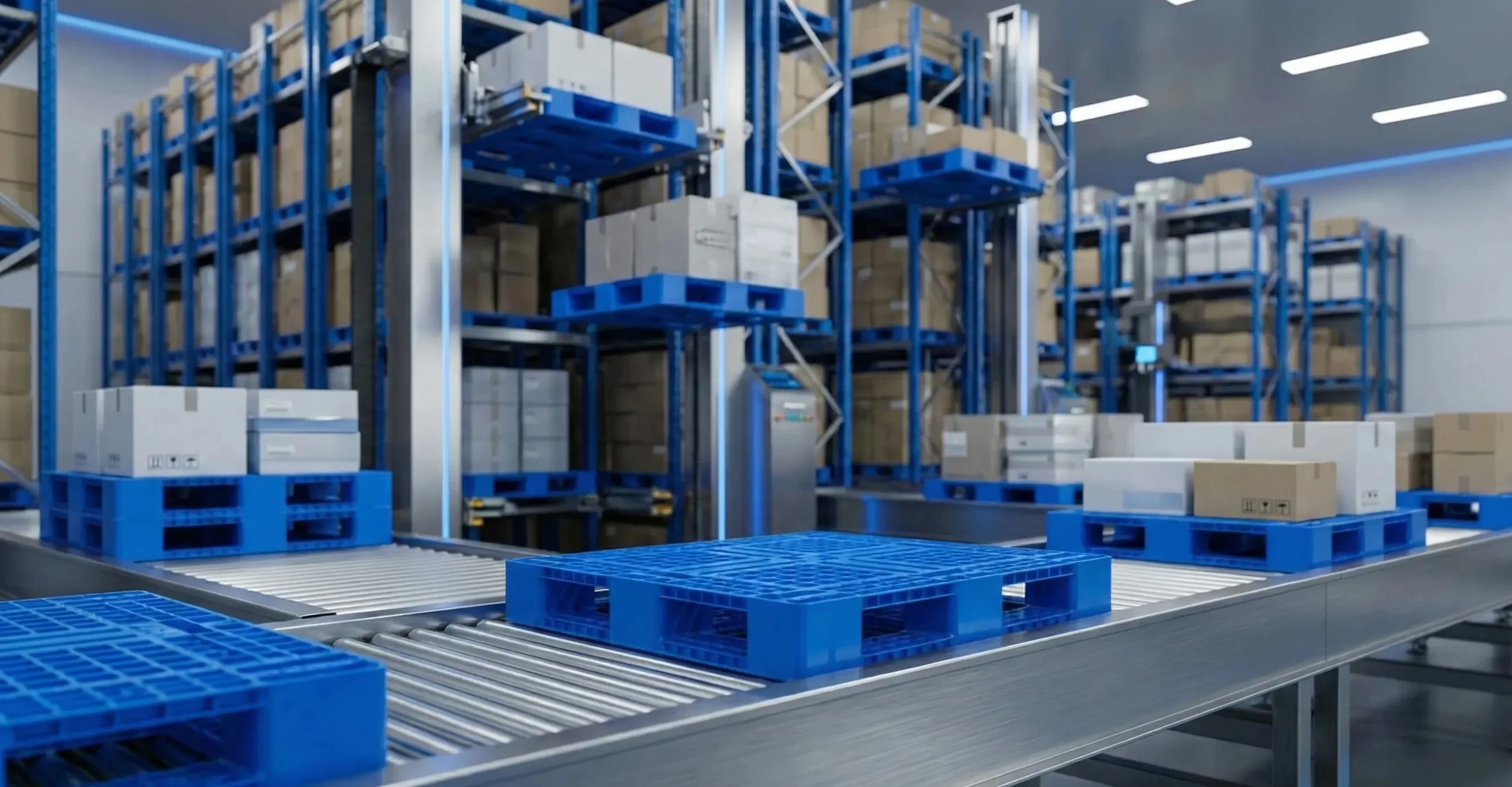
It is a necessary question, but it only tells part of the story. Many HDPE pallets used in cold-chain applications are designed to operate around -20°C, which is one reason HDPE is commonly selected for frozen storage and low-temperature logistics.
"Suitable for around -20°C" does not mean every HDPE pallet will perform the same at -20°C.
A pallet in cold storage is not sitting still. It still goes through fork entry, lifting, landing, transfer, rack storage, impact and repeated circulation. So the more useful question is not simply whether the pallet can stay at a low temperature. It is:
Two pallets labeled HDPE can still behave differently because HDPE is a material category, not a finished performance specification. These factors can all influence the final result:
The same applies to virgin and recycled material. The more useful question is whether material performance is consistent and whether the material–structure combination fits the actual low-temperature application.
3. "How Much Can It Carry?" Is Not a Complete Question
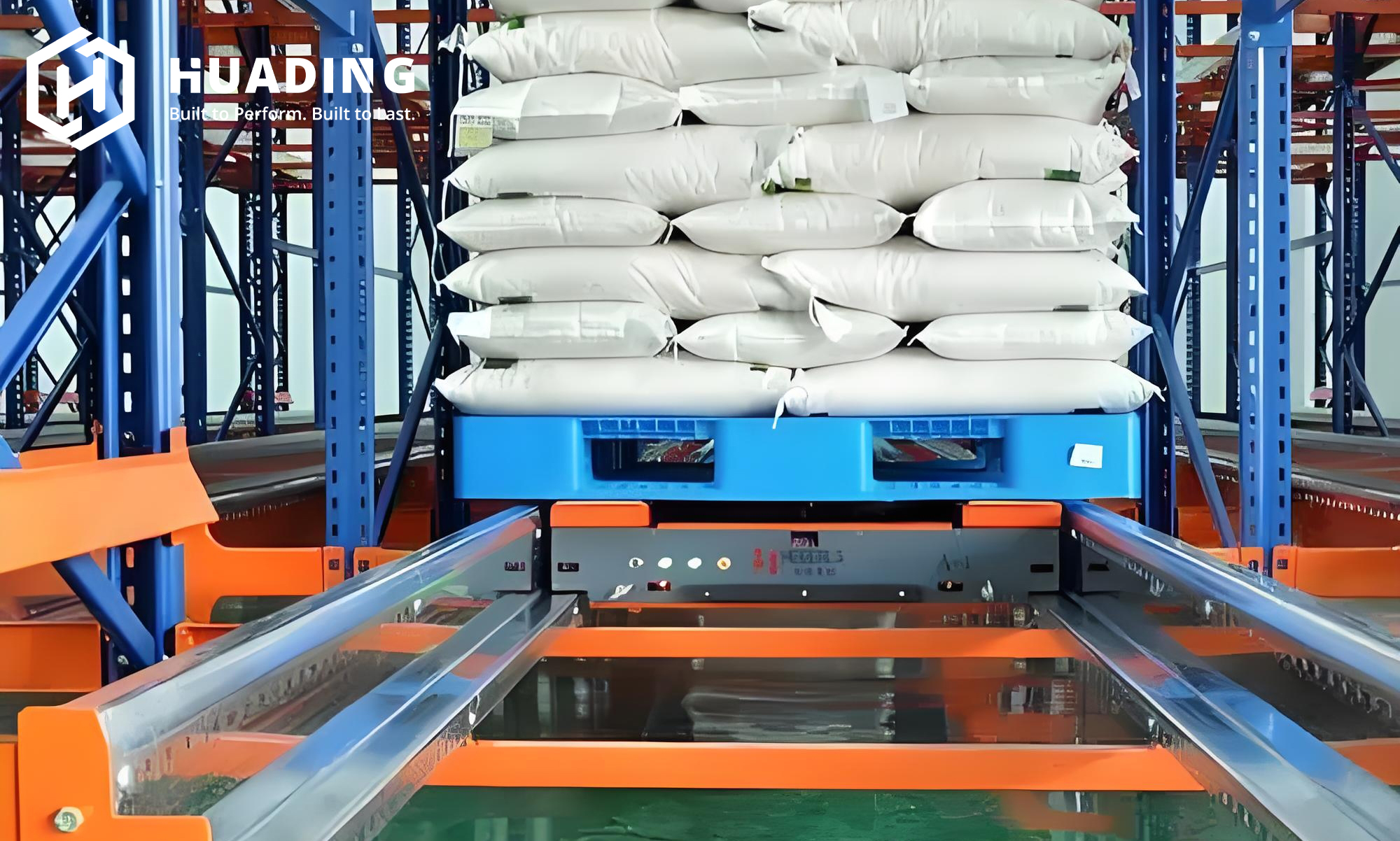
Another specification buyers can easily misread is load capacity.
A typical pallet data sheet may list static load, dynamic load and racking load. These figures matter, but they are tied to specific support and test conditions.
The bottom structure receives broad support.
Part of the pallet may span between support points, changing how the load is transferred through the structure.
So instead of asking only:
Ask:
This matters even more in cold storage. Operating temperature, support method, load distribution and storage duration all affect the real working condition.
4. Where a Pallet Fails Can Tell Buyers a Lot

When a pallet cracks or deforms in cold storage, the first reaction is often:
That is one possibility. But the failure location can also provide an important clue.
| Where the damage appears | What is worth checking |
|---|---|
| Repeatedly around fork-entry areas, feet or corners | The actual fork-entry pattern, impact position and local structure |
| Deflection or bottom deformation on racks | Rack support position, span, load center and bottom structure |
Cold-Storage Pallet Selection Comes Down to Four Variables
If the entire selection process had to be reduced to one practical framework, it should not start with "HDPE or PP?" It should start with four variables.
Not simply "it will be used in cold storage." What is the long-term operating temperature? Is it chilled storage or continuous frozen storage? Does the pallet repeatedly move between different temperature zones?
Where is the pallet actually carrying the load — floor, stacking, two-beam rack, shuttle rack or conveyor? The same cargo weight can create very different load paths under different support conditions.
A 1,000 kg load does not change. But the way the pallet carries that 1,000 kg can be completely different depending on how it is supported.
How often is the pallet moved? What handling equipment is used? From which direction do the forks enter? Where does contact or collision most often occur?
Cold-storage pallet selection should not look only at static load. Many failures are exposed gradually through repeated handling and localized impact.
A pallet does not enter a cold store once and finish its job. A real operating cycle may look like the sequence below.
HUADING Plastic Pallets in Cold-Chain Applications
This framework becomes more practical when applied to real cold-chain scenarios.
Ice-cream cold chain
In one HUADING ice-cream cold-chain application, products needed to be stored and transported at -22°C.
The move from wood to plastic mainly addressed recurring problems such as wood pallet deformation and cracking, which could further lead to tilted loads, dropped cartons or packaging damage.
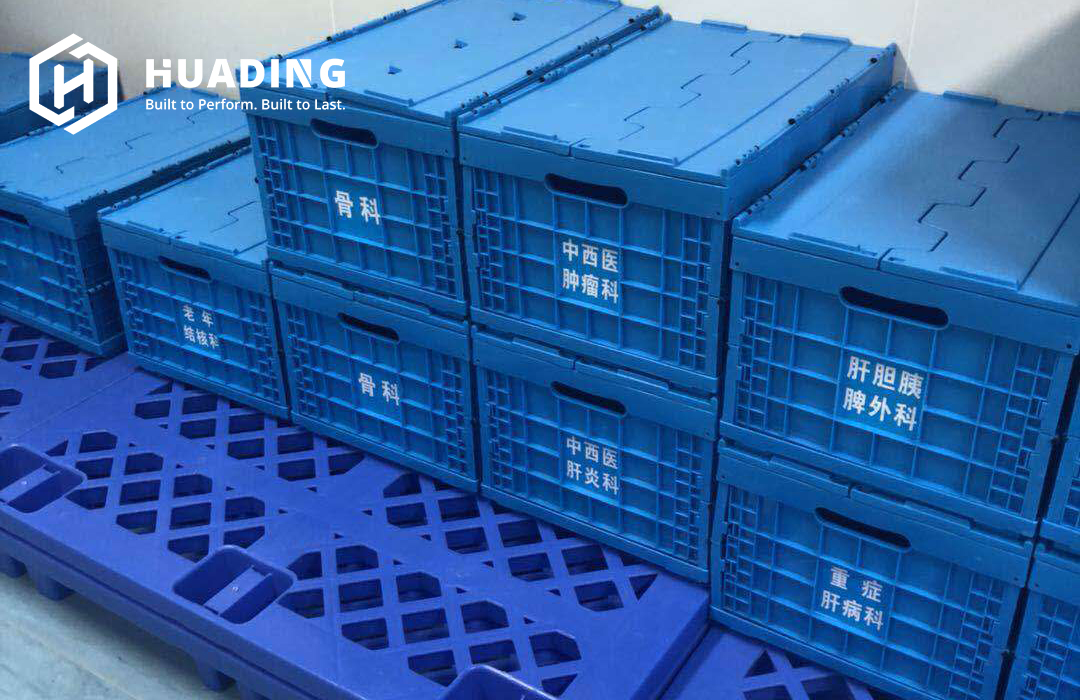
Pharmaceutical cold chain
In another pharmaceutical cold-chain application, the operating environment placed much stricter requirements on temperature control, warehousing and hygiene management.
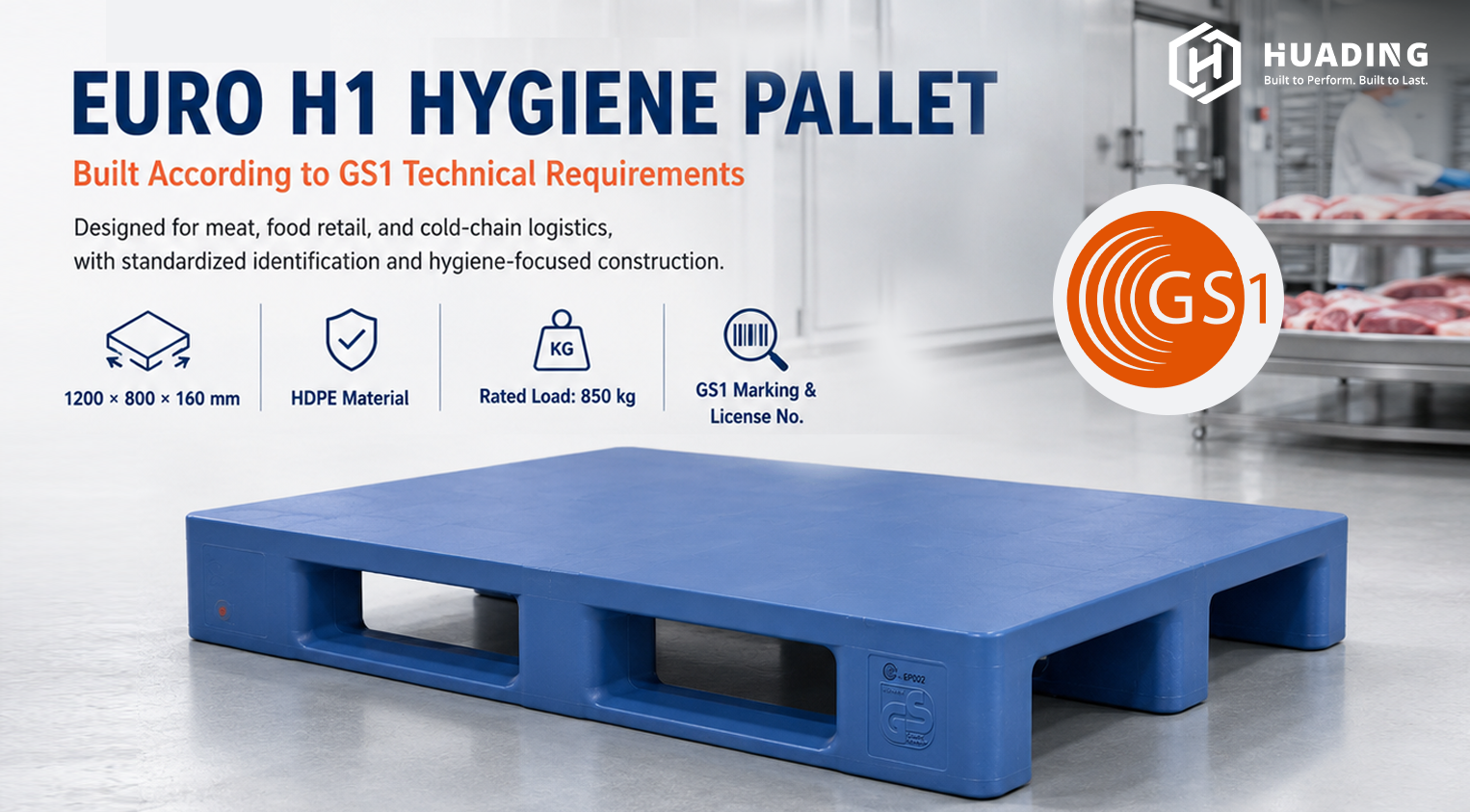
Plastic pallets do not absorb water and are relatively easy to clean and disinfect, making them better suited to logistics environments with higher requirements for cleanliness, hygiene management and repeated circulation.
HUADING supplies standard plastic pallets for applications including:
For us, the conversation does not start with:
It starts with:
It is a condition match.
Evaluating a Plastic Pallet for Cold Storage?
If you are already seeing cracking, deformation or other issues, include the failure location and actual operating scenario as well. These details help us narrow down which HUADING standard plastic pallet material and structure are more closely matched to the real application.
Contact Us →- Actual operating temperature
- Pallet size
- Cargo weight and load distribution
- Floor, stacking or racking conditions
- Forklift, conveyor or automated handling method