


A steel tube moving out of a reinforced pallet may look like a small component issue. But when it happens after a bulk shipment, the more useful question is not simply how to put the tube back. It is: can the retention structure be improved so the same issue is less likely to occur again during real-world handling? That was the question we asked after receiving feedback from a customer in Guatemala using our 1311 grid-style reinforced plastic pallet.
What the Customer Reported
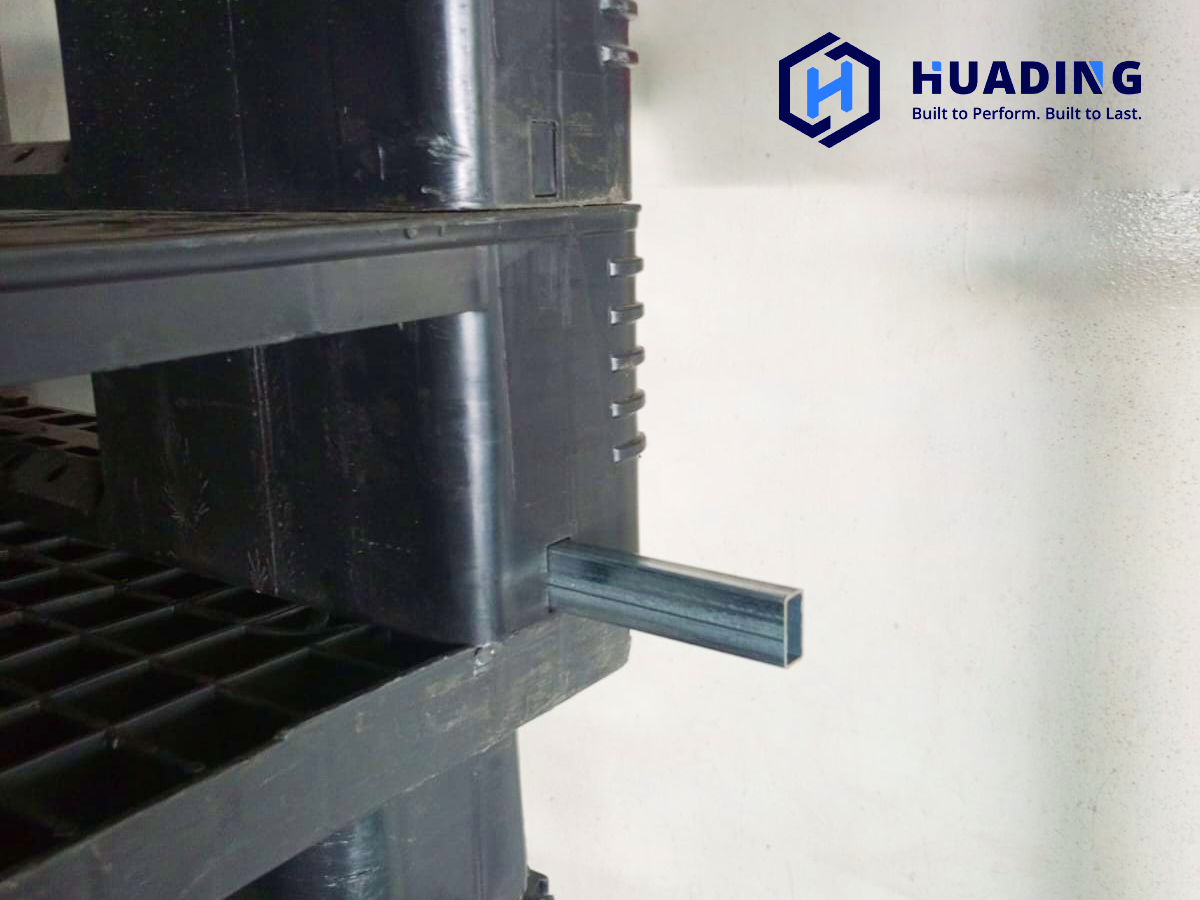
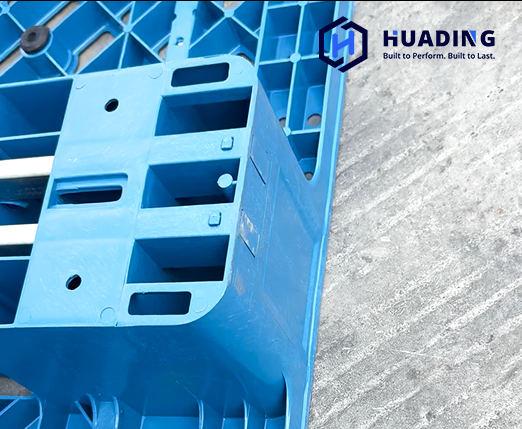
The 1311 pallet uses internal steel tubes for additional reinforcement. Each tube sits inside a dedicated channel. A small amount of clearance is required for correct assembly — this is a normal structural characteristic and does not by itself indicate a product defect. But the case was worth reviewing beyond the immediate fix.
What We Found During the Review
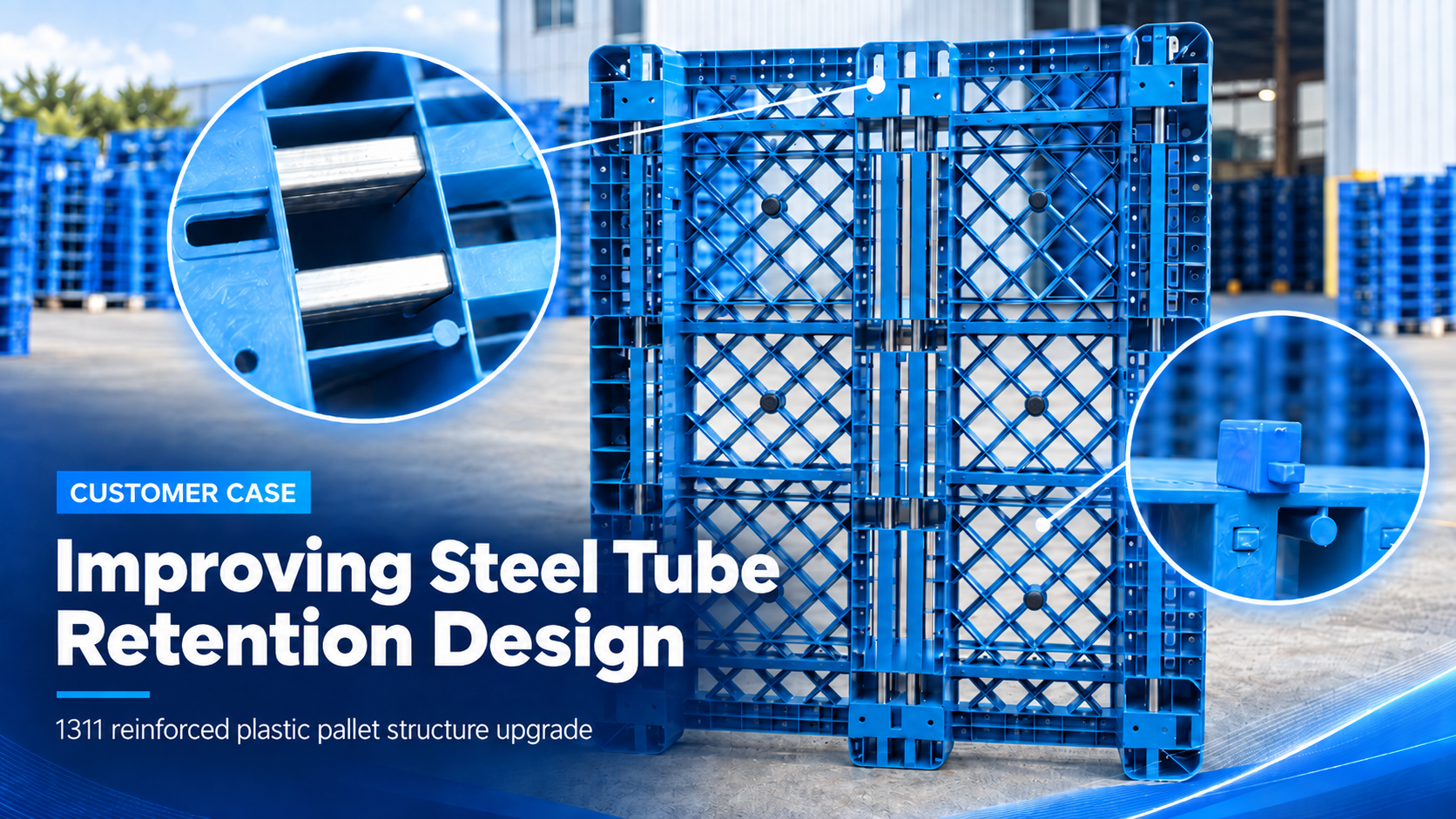
The original design used the tube channel and end plug to keep the steel reinforcement in position. The clearance inside the channel allows the steel tube to be installed correctly and to perform its reinforcement function. If a tube shifts slightly, it can be repositioned.
So the question raised by this case was not simply: "Is the clearance within the normal design range?"
It was: "Can we further limit tube movement before it reaches and pushes against the end plug during handling?"
HUADING's Steel Tube Retention Improvement
After reviewing the retention structure, we introduced two changes.
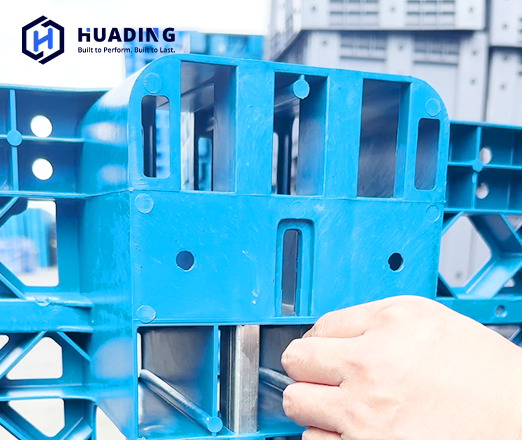
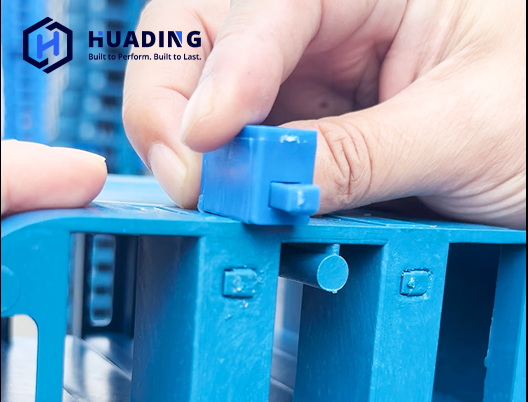
Updated retention logic
How We Validated the Updated Structure
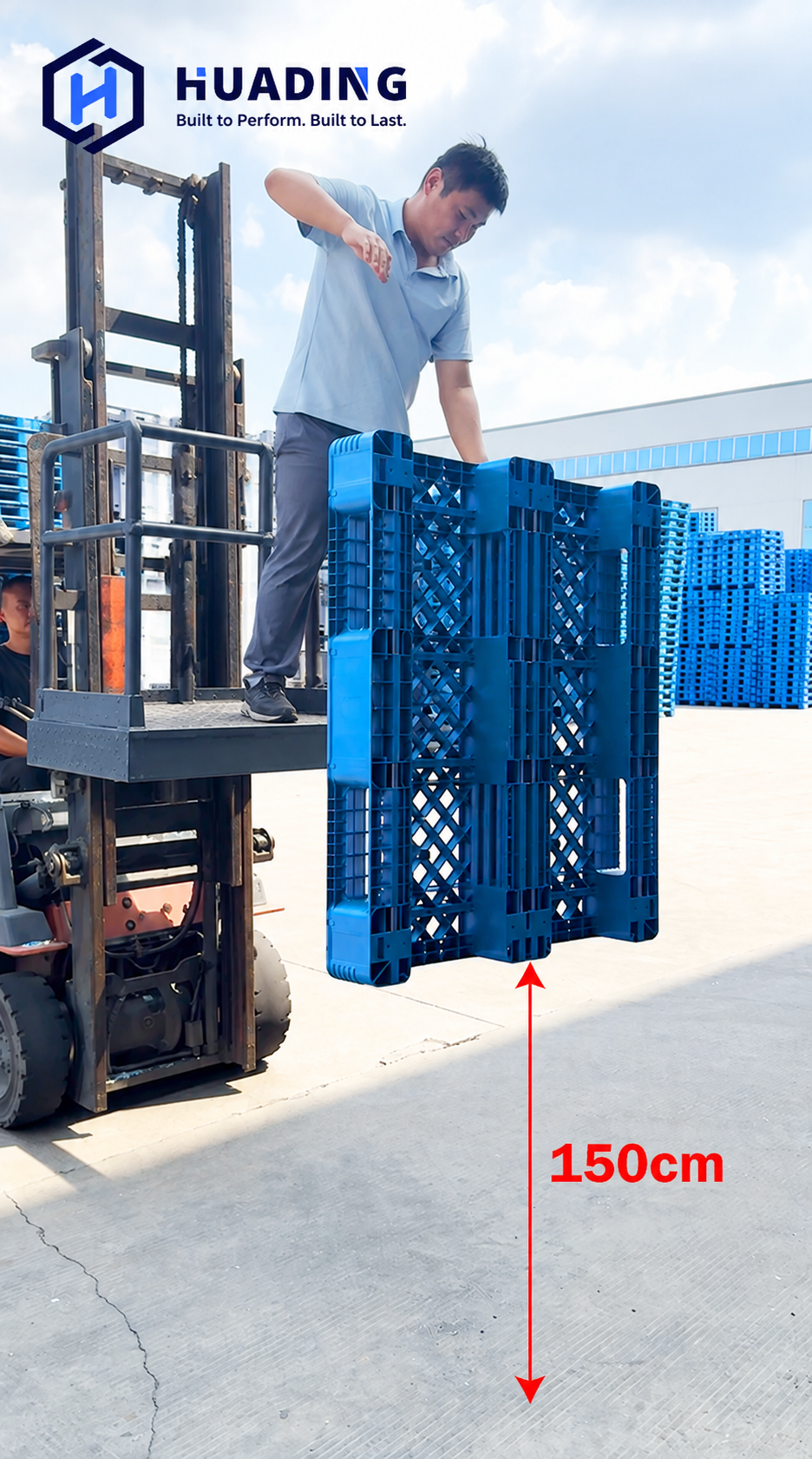
Making a design change is only one part of an improvement. The next step is checking whether it performs as intended. After updating the tube channel and end-plug structure, we carried out a vertical drop test from approximately 1.5 metres.
From Customer Feedback to a Verified Improvement
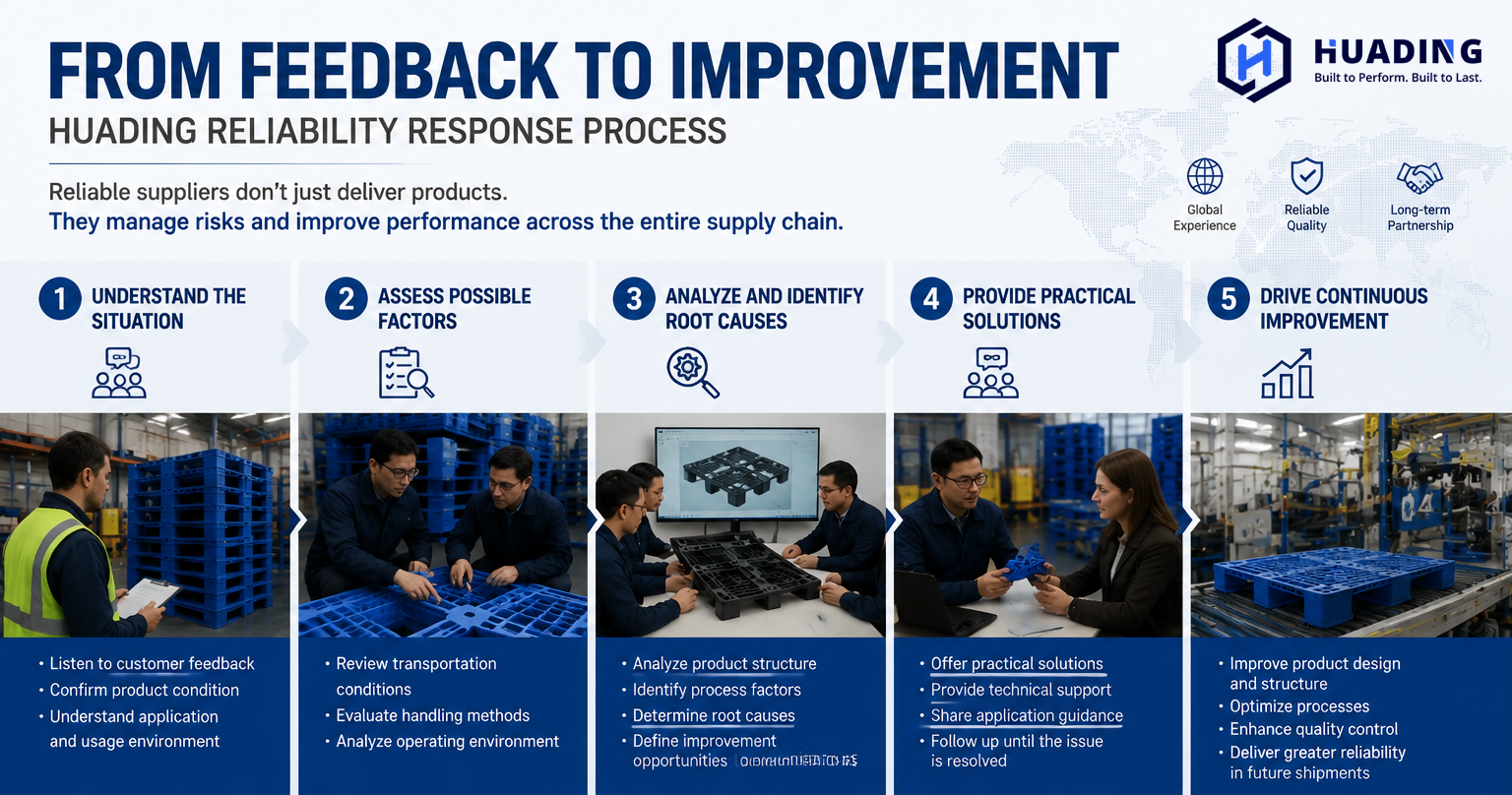
The important part of this case was not simply replacing an end plug. The full process was:
We also worked with the customer to identify the affected pallets and arrange replacement end plugs where needed — addressing the immediate issue while the design review addressed a separate question: what can we change to reduce the likelihood of the same type of issue occurring again?
Why This Case Matters Beyond One Customer
When buyers evaluate steel-reinforced plastic pallets, the discussion often focuses on pallet dimensions, load requirements, reinforcement quantity, bottom structure and forklift compatibility. Those are all important selection criteria. But another detail is worth reviewing:
When a reinforcement component shows signs of movement — what does your team check first: the component itself, or the structure that is meant to hold it in place?
Using the 1311 Pallet or a Comparable Reinforced Pallet?
If your team wants to check which version of the retention structure you currently have, send us your product code or a photo of the tube channel — we are happy to confirm the structure and share the current specification.
Huading supplies standard plastic pallets and reusable logistics packaging for warehousing, material handling, factory circulation and export applications.
Contact Us →