


- Customer
- Japanese lifestyle retailer
- Product
- Standard 650 Series collapsible crates
- Application
- Storage, picking, replenishment and internal handling
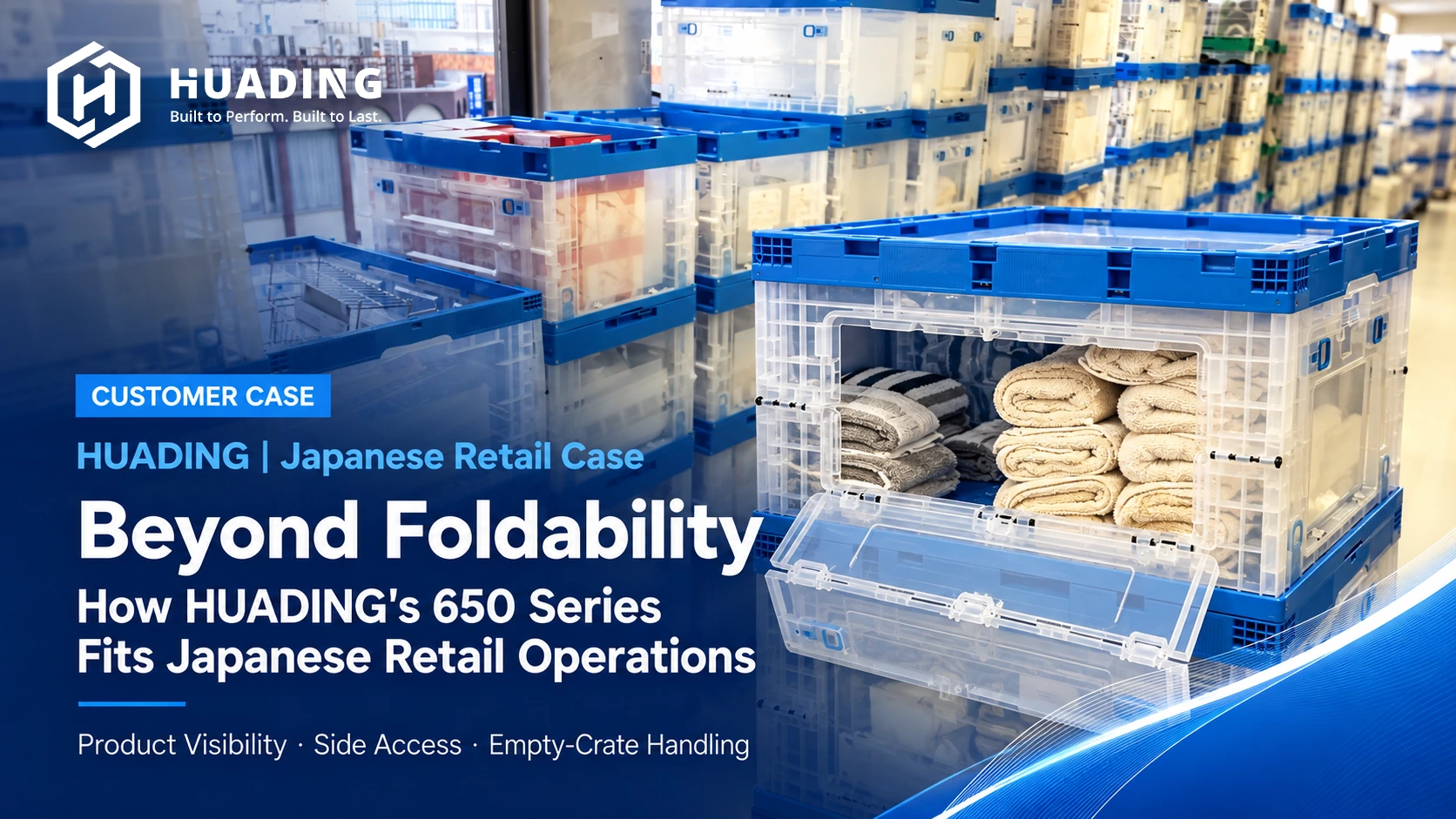
A Japanese lifestyle retail company was already using collapsible crates. Its next selection focused on making products easier to identify and access when loaded, while retaining compact empty-crate handling. HUADING supplied a standard 650 Series configuration with transparent walls, opening side panels and a collapsible structure.
The customer and the packaging challenge
The customer is a Japanese lifestyle retail company offering apparel, textiles and everyday consumer goods. Its store backrooms and warehouses support product storage, order picking, store replenishment and internal movement between operating areas.
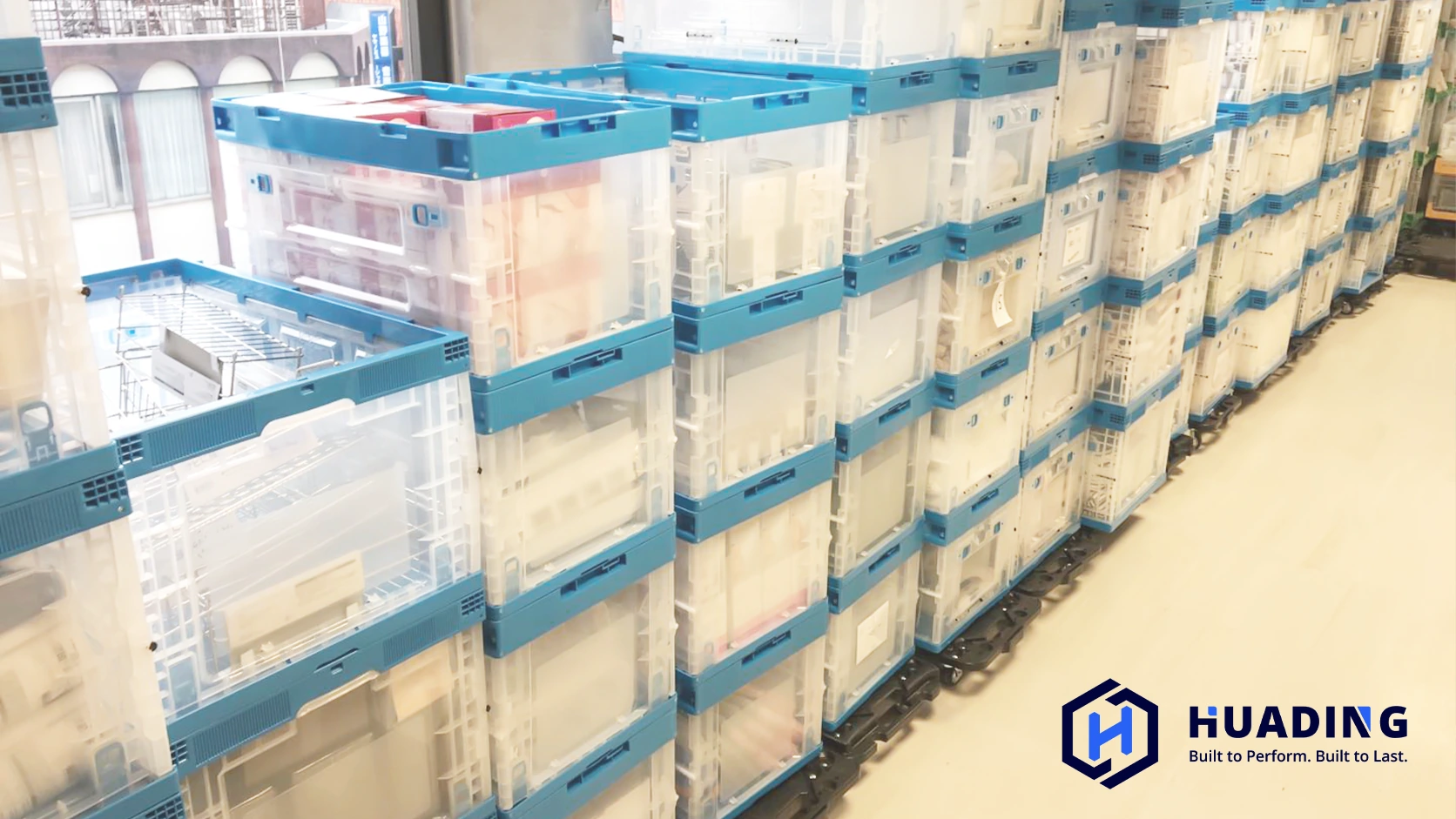
In this type of operation, crates do more than hold inventory. Staff need to identify products, retrieve goods and move containers throughout the working day. Once goods are removed, the empty crates still need to be collected, stored and handled.
The customer was already using collapsible crates. It wanted a standard product better suited to everyday operations, with two priorities:
- Product identification: see the contents across multiple crates without repeatedly opening each container.
- Empty-crate management: fold, collect, store and handle empty containers more conveniently.
Access to goods while crates were stacked was another practical consideration for daily picking and replenishment. Foldability alone did not describe the full requirement.
Three standard features for loaded and empty handling
HUADING supplied its 650 Series collapsible plastic crates from its established standard product range. Three structural features addressed different handling requirements.
Transparent walls for product identification
Transparent walls allow staff to see the contents from outside the container. For retailers managing multiple product categories, this makes identification more convenient during storage and picking, reducing the need to open crates simply to check what is inside.
Opening side panels for access while stacked
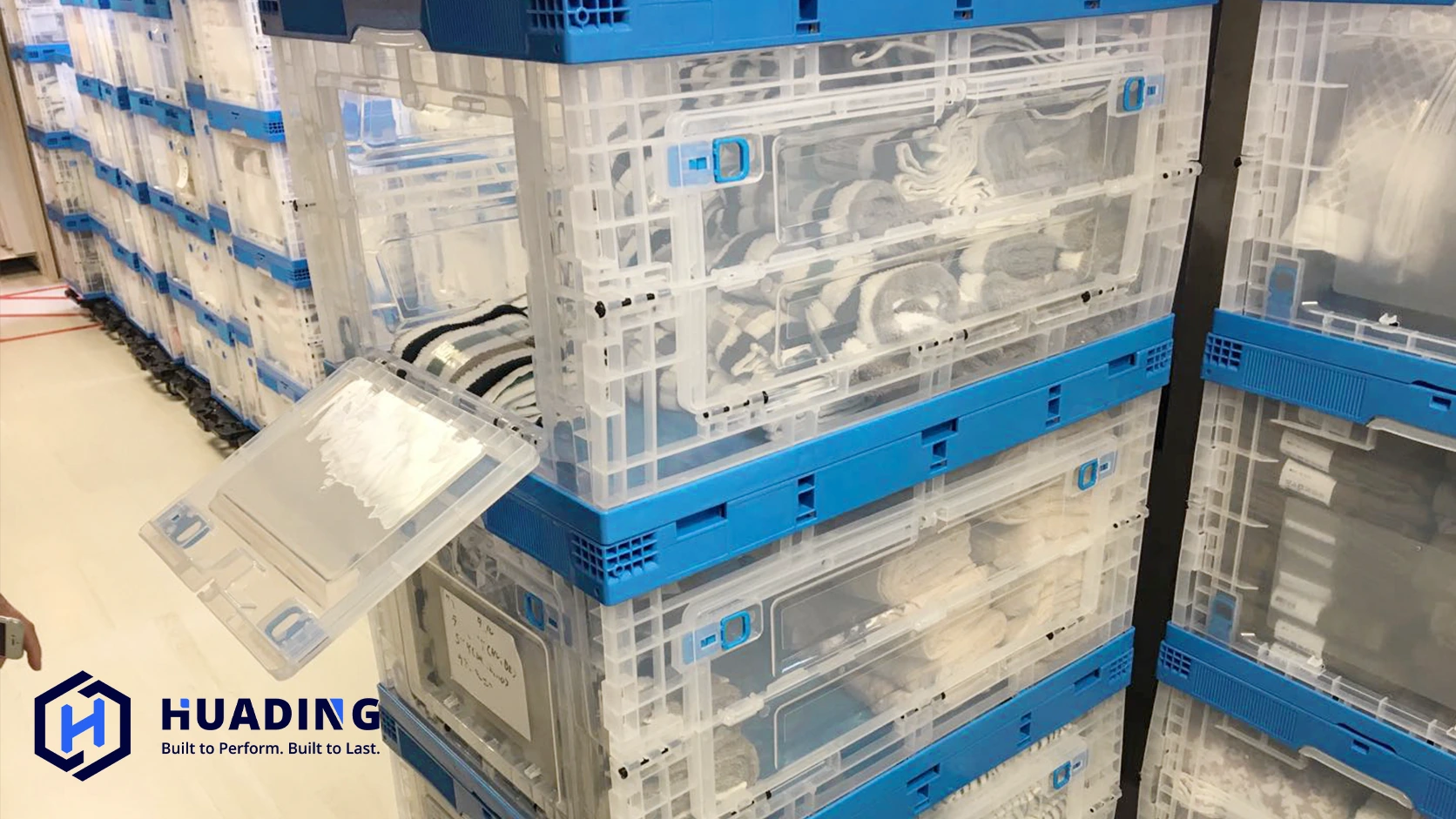
Staff can open the side panel of a lower crate without first removing the containers above it. For frequent picking and replenishment in store backrooms and warehouses, this reduces unnecessary crate movement just to retrieve products.
Collapsible construction for empty-crate handling
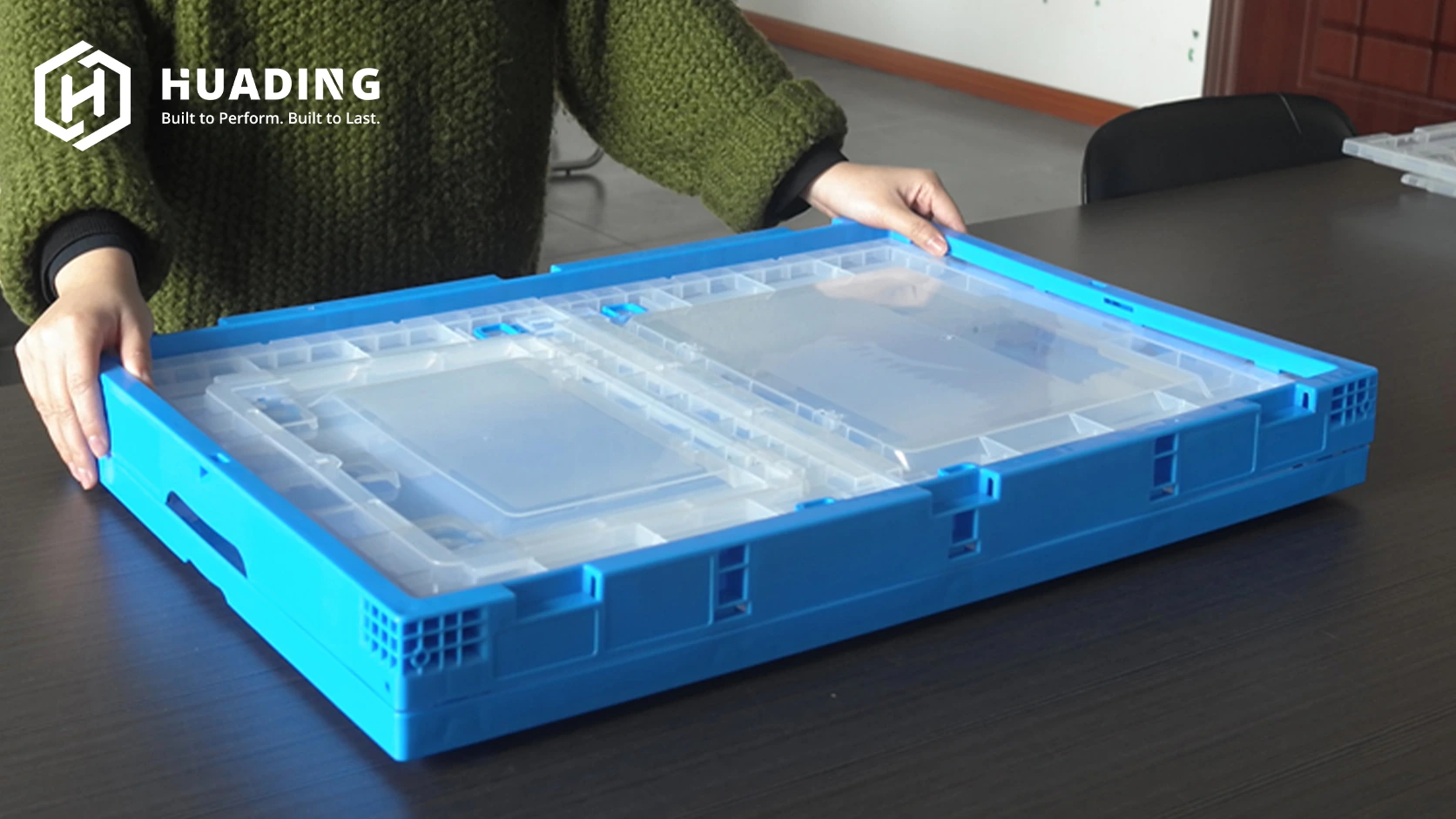
Once products are removed, the crate can be folded into a more compact form. Folding reduces its external height and allows empty containers to be consolidated for storage and subsequent handling.
All three features belong to the standard 650 Series configuration described in this case. A project-specific container design was not required.
How the 650 Series fits daily retail operations
The customer purchased and deployed the crates across connected activities in its store backrooms and warehouses.
- StorageOrganize and identify products
- Picking and replenishmentAccess goods through side panels
- Internal handlingMove stacked crates on dollies
- Empty-crate managementFold and consolidate after unloading
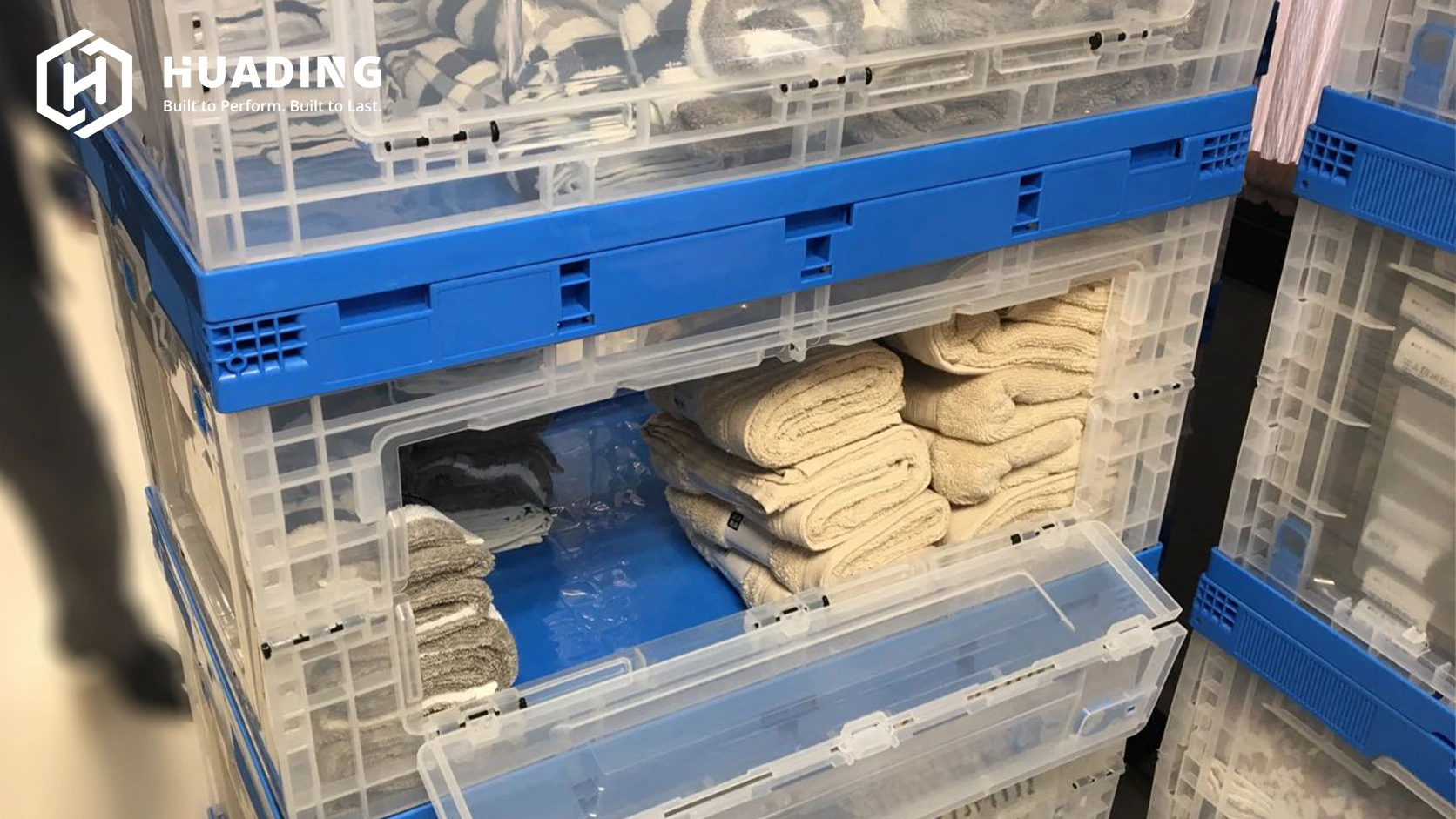
Storage, picking and replenishment
Clothing, towels and other products are stored in transparent crates arranged in stacked configurations. Staff can identify contents through the walls and retrieve goods through the side panels.
The same container format supports organized storage and regular product access.
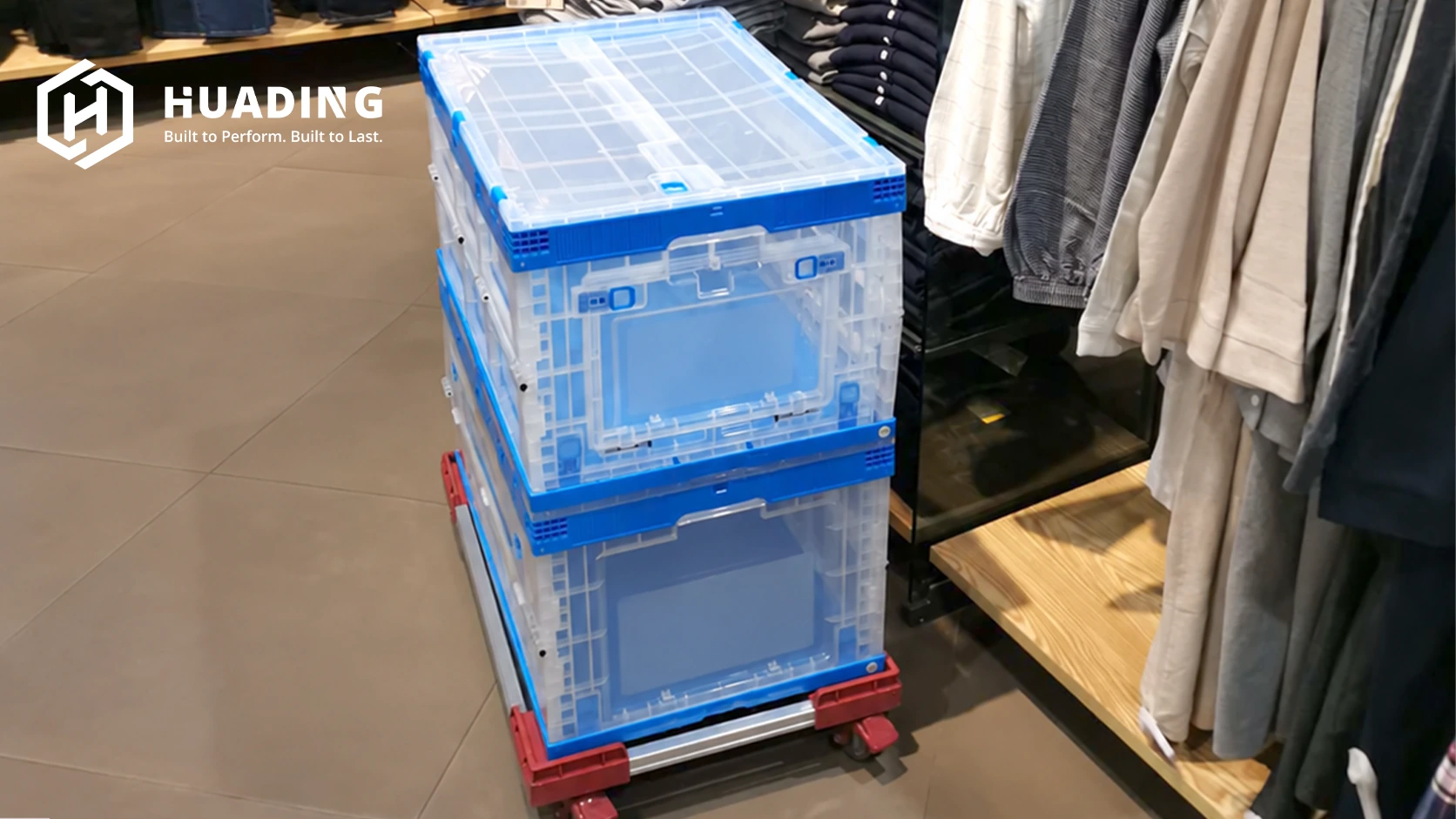
Internal handling and empty collection
Multiple crates are stacked on wheeled dollies for movement between operating areas. Products can remain in the same containers as they move from storage to subsequent handling activities.
After unloading, staff fold and consolidate the crates. The folding function forms part of the customer's empty-crate management process.
Looking for crates that fit your retail operation?
Share how goods are stored, picked and moved, and how empty crates are collected. Our team can help you compare suitable standard configurations.
Discuss your crate requirementsUseful details for our team
- Required external and usable internal dimensions
- Products, load per crate and stacking conditions
- Side-access needs and dollies or other equipment
- Estimated quantity and delivery destination