


Static load: 6T. Dynamic load: 2T. Rack load: 2T. On paper, the numbers looked suitable. But for a bagged-sugar warehousing customer in Cambodia, the real problem appeared somewhere else: the fork-entry opening began to deform after multi-level stacking. If the load ratings match the requirement — why can the pallet still become difficult to use?
A Real Case from Bagged-Goods Warehousing
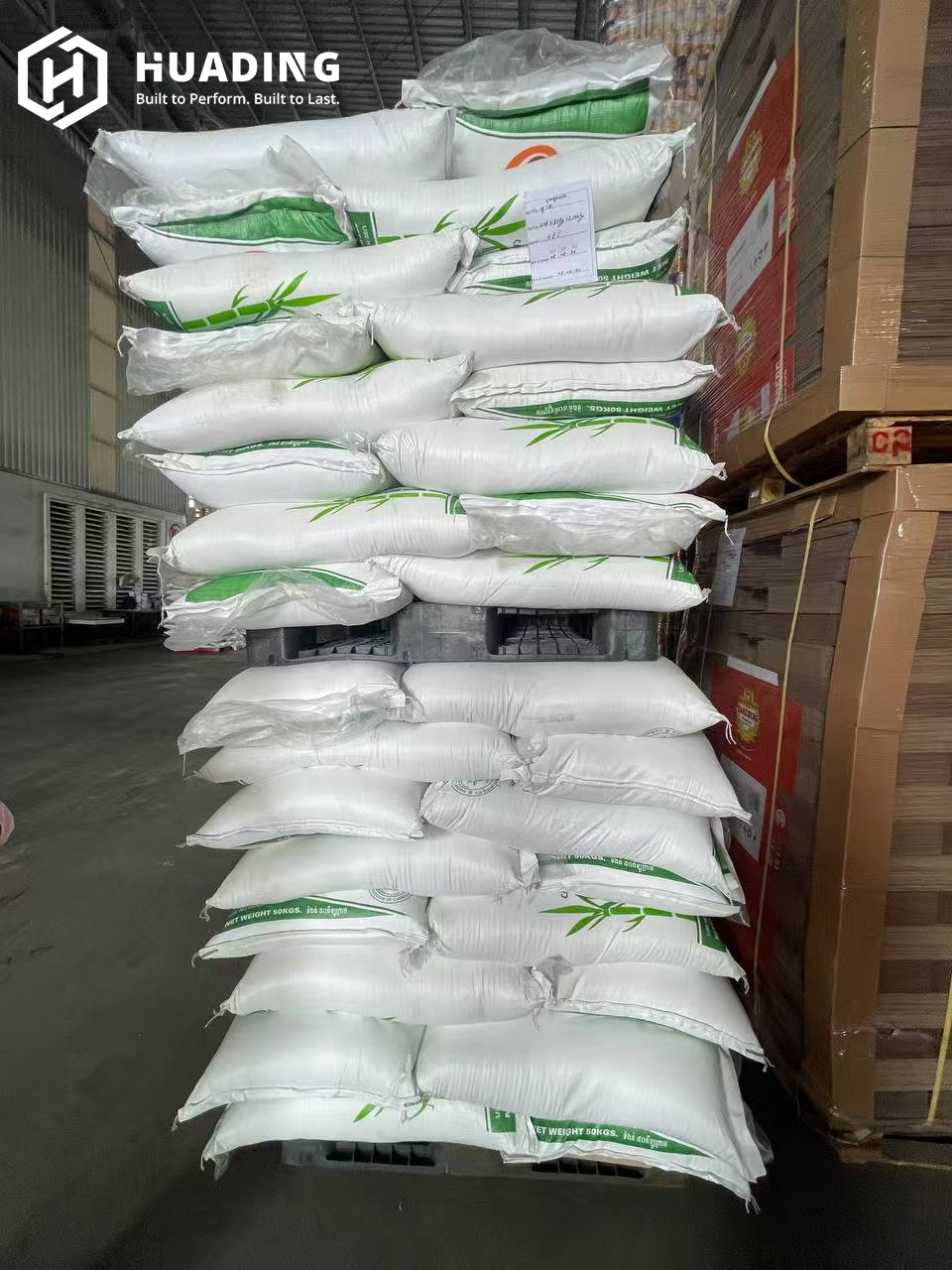
The customer stores bagged sugar and uses pallets for multi-level stacking, while the same pallet also needs to be suitable for racking. Before contacting Huading, the customer had been trialing a competitor's 1450 × 1100 × 160 mm flat double-face plastic pallet.
| Load Type | Required Rating | Status on Previous Pallet |
|---|---|---|
| Static Load | 6T | Met on specification sheet |
| Dynamic Load | 2T | Met on specification sheet |
| Rack Load | 2T | Met on specification sheet |
| Fork-Entry Geometry | Must remain usable under stacking | Deformation observed in practice |
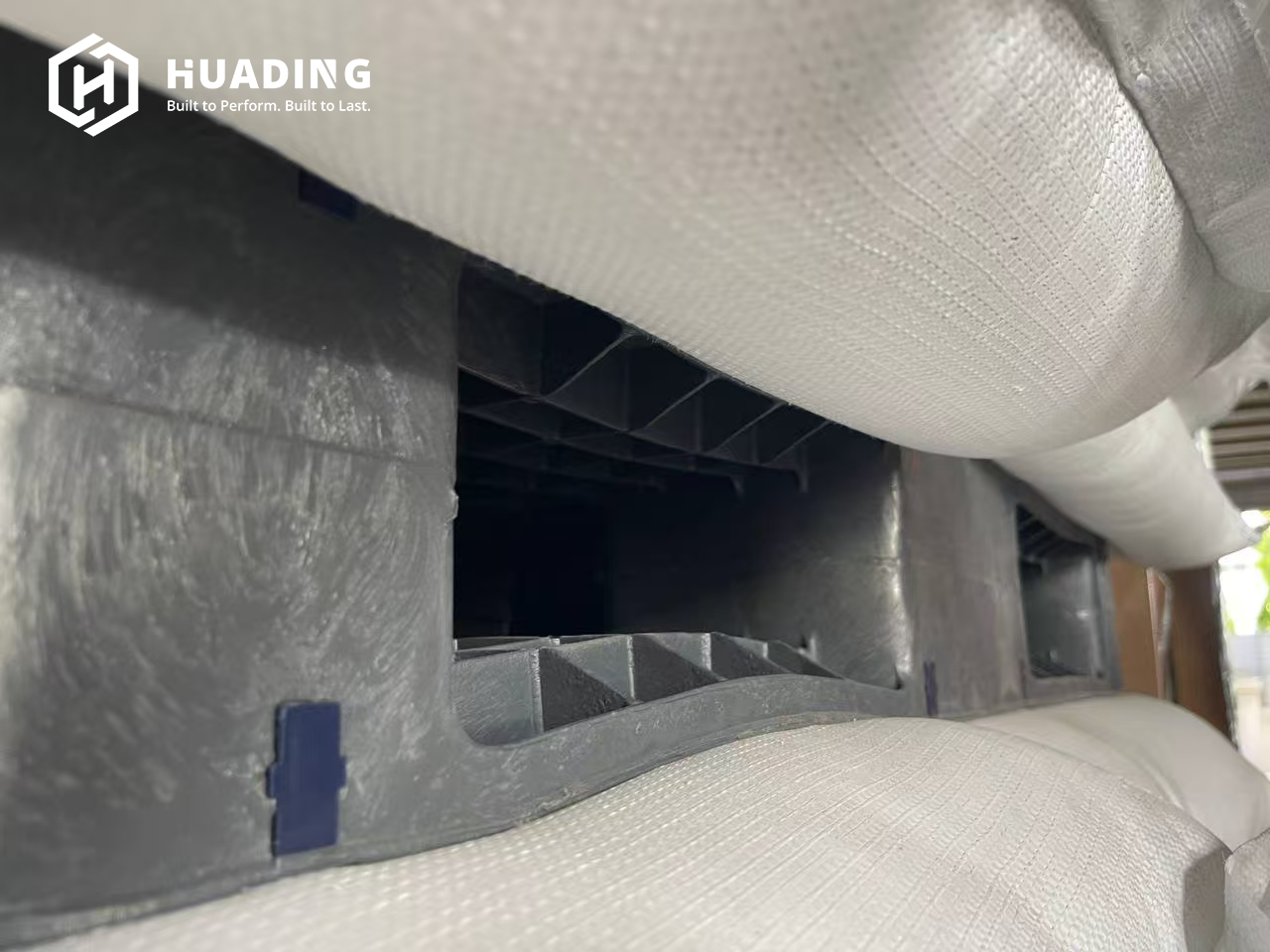
After actual stacking use, visible deformation developed around the fork-entry area. The opening became smaller, which directly interfered with normal forklift entry and reduced handling efficiency. The issue was therefore not simply can the pallet carry the load, but a second question that mattered just as much:
Load Capacity and Dimensional Stability Are Not the Same Question
Describes how a pallet is intended to perform under defined loading and support conditions. Determines the rated weight the pallet can carry in static, dynamic, and rack scenarios.
Describes whether critical structural zones — such as the fork-entry opening — retain the geometry required for normal handling while under that load in actual operating conditions.
This is the kind of structural detail that can be overlooked when pallet selection focuses mainly on headline load ratings. For this customer, the visible problem appeared at the fork-entry opening — a detail that may look minor on a drawing but directly determines whether the pallet can still be handled normally by a forklift.
Why Multi-Level Stacking Changes the Selection Discussion
Multi-level stacking creates a different operating condition from single-level floor storage. When loaded pallets are stacked, the lower pallets must support the loaded units above while still preserving the structural geometry required for later handling.
For customers combining heavy bagged goods, multi-level stacking and racking, three headline load figures alone may not tell the full story. The actual application also depends on:
What Huading Recommended
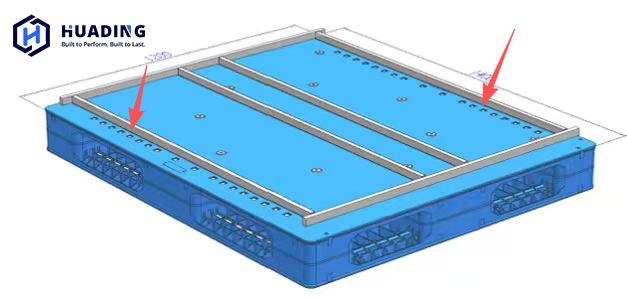
After reviewing the customer's application, Huading recommended a flat double-face plastic pallet with steel reinforcement specifically selected to address fork-entry stability under multi-level stacking conditions.
The purpose of this reinforcement is not simply to present a higher number on a specification sheet. It is intended to improve overall structural rigidity — including support around critical areas such as the fork-entry zone — and to reduce deformation risk under the customer's multi-level stacking conditions.
What Buyers Should Check Beyond the Load Rating
Static, dynamic and rack load ratings still matter — but they should be the start of the conversation, not the end of it. Before finalizing a pallet for multi-level stacking and racking, ask your supplier:
The Takeaway
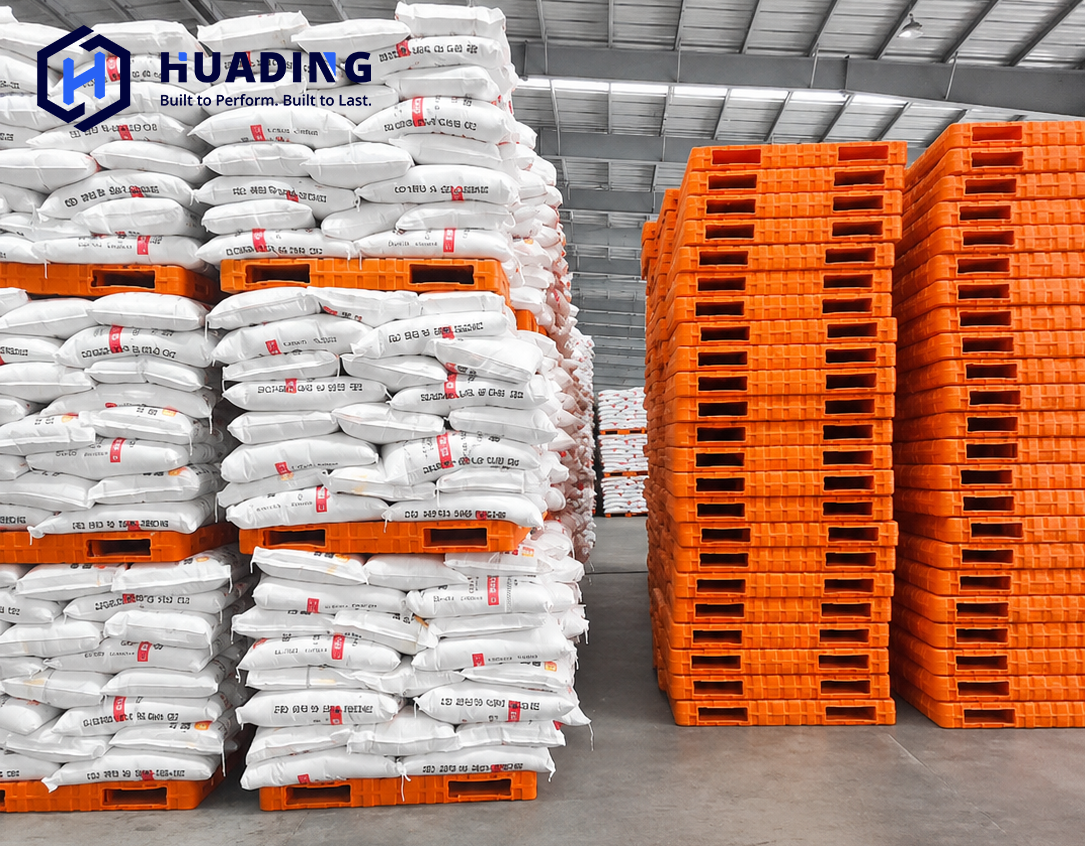
A pallet can look suitable based on load ratings and still become difficult to use in a real warehouse.
The lesson from this Cambodia bagged-sugar application is straightforward:
Do not evaluate only how much weight a pallet can carry. Also evaluate whether the critical structure your operation depends on can remain usable under that weight.
For applications involving heavy loads, multi-level stacking, racking and forklift handling, fork-entry stability deserves the same attention as static, dynamic and rack load ratings.
At what stage does your team currently catch issues like this — during initial pallet selection, or only after they show up in warehouse operation?
Selecting a Pallet for Heavy Bagged Goods or Multi-Level Stacking?
Share your unit load, stacking method, racking conditions, and forklift type with Huading.
Our team can help evaluate whether a standard or steel-reinforced pallet is more suitable for your application — and specifically whether fork-entry dimensional stability is a risk your current specification addresses.
Contact Us →